
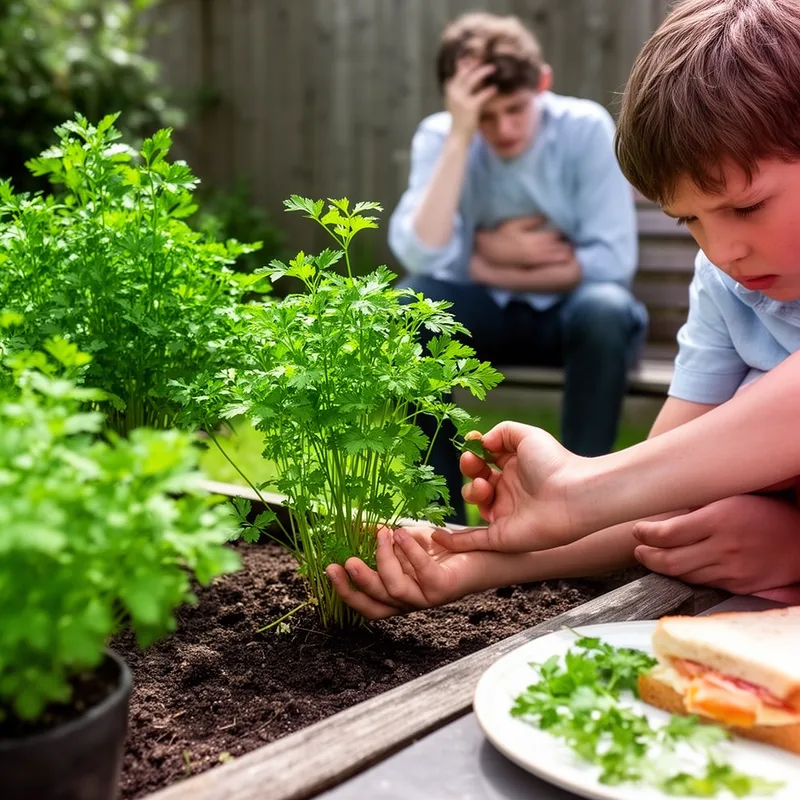
Aethusa cynapium
- noun
- Specialized
 :
Aethusa cynapium
:
Aethusa cynapium
- It is important to remove Aethusa cynapium from gardens to prevent accidental poisoning.
Examples
-
The leaves of Aethusa cynapium are similar in appearance to edible parsley.
-
Children have mistaken Aethusa cynapium for parsley, with dangerous consequences.
-
The Aethusa cynapium plant can be very dangerous if ingested.
-
Many people mistake Aethusa cynapium for harmless parsley.
-
Children have mistaken Aethusa cynapium for parsley, which can lead to dangerous poisoning if eaten.
-
It is crucial to remove Aethusa cynapium from gardens to avoid accidental poisoning by this toxic plant.
-
The leaves of Aethusa cynapium closely resemble those of parsley, making it easy to confuse the two.
Synonyms

A plant that looks like parsley and can make you very sick if eaten

A poisonous plant that looks like parsley and can make you sick
Surface Forms
Morphology
Aethusa + cynapium
This is a Latin binomial scientific name (a proper noun) rather than a compositional English phrase; species epithets like 'cynapium' are not meaningful to a B1 learner and one constituent is listed as unknown. Knowing 'Aethusa' as a poisonous genus would not let a learner derive the exact sense 'a poisonous European plant that causes nausea' from the parts, so the meaning is lexicalized and not inferable.
Etymology
Aethusa cynapium is often called 'fool's parsley' because it looks very like edible parsley but is actually poisonous and can make people sick. That's why the name and old warnings remind us not to eat parsley-like leaves from the wild.

