
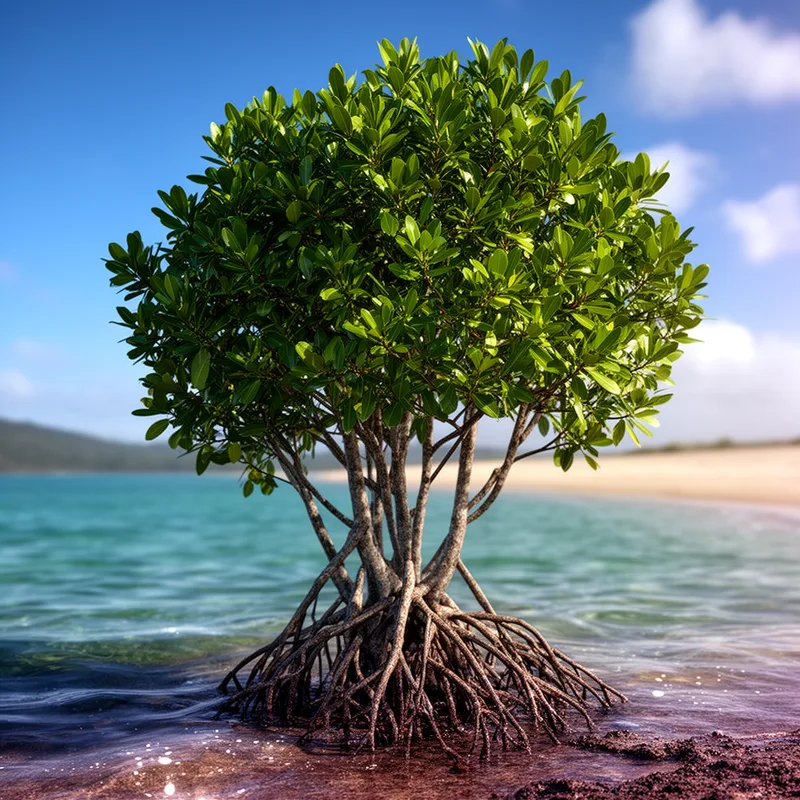
Aegiceras majus
- noun
- Australian
- Locals often refer to Aegiceras majus as the Australian mangrove due to its similarity to other mangrove species.
Examples
-
Researchers studied the adaptation strategies of Aegiceras majus in saline environments.
-
The coastal wetlands were populated with Aegiceras majus thriving near the water's edge.
-
The Aegiceras majus thrives in coastal mangrove areas.
-
Have you seen the Aegiceras majus in the mangroves?
-
The coastal wetlands were populated with Aegiceras majus thriving near the water's edge.
-
Locals often refer to Aegiceras majus as the Australian mangrove due to its similarity to other mangrove species.
-
Researchers studied the adaptation strategies of Aegiceras majus in saline environments.
Surface Forms
Morphology
Aegiceras + majus
This is a Latin binomial (scientific name) rather than a compositional English phrase: the genus name 'Aegiceras' labels a group of mangrove trees and the species epithet 'majus' is a non‑English/Latin element (not a lexical item learners know). Knowing the constituent elements at a basic level does not allow a B1 learner to derive the specific meaning 'an Australian tree species resembling the black mangrove' because species names function as arbitrary labels, so the overall meaning is not predictable from the parts.
Etymology
Aegiceras majus may come from old Greek words meaning 'goat' and 'horn' because this mangrove has small, curved fruits that look like little horns. The second word majus means 'bigger', so the name shows it as the 'bigger' Aegiceras species.

