
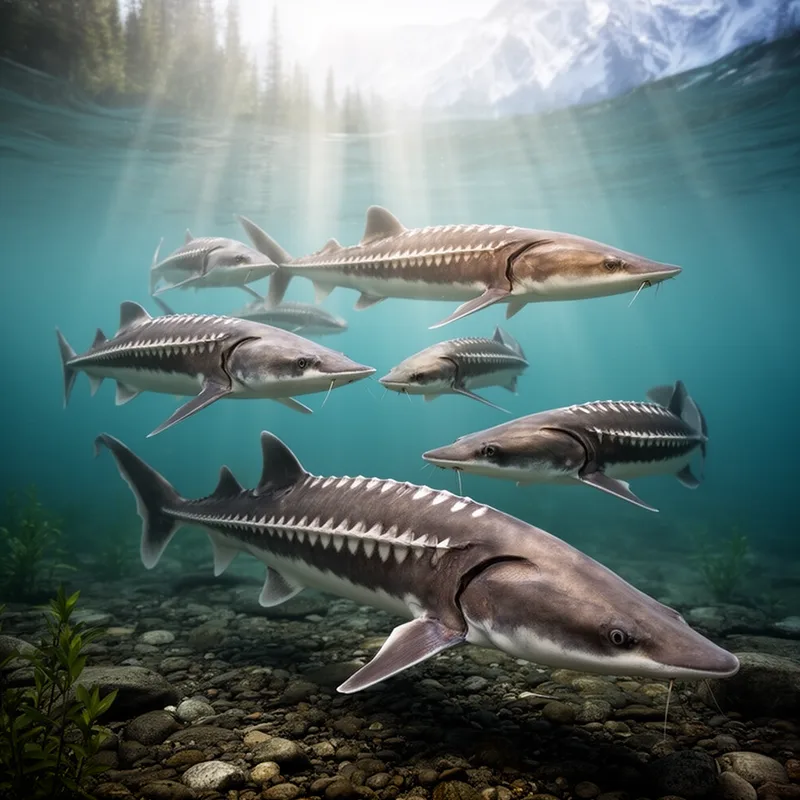
Acipenseridae
- noun
- /ˌæsɪˈpɛnʃəˌrɪdi/
- Specialized
- Sturgeons (the Acipenseridae) have long generation times and are affected by North American and European inland commercial fisheries targeting other species (Collins et al. 1996, Hensel and Holcik 1997, Bettoli et al. 2009).
Examples
-
The Acipenseridae family includes several species of sturgeons that inhabit rivers and lakes.
-
The Acipenseridae are considered living fossils due to their ancient lineage and unique characteristics.
-
Biologists study the Acipenseridae to understand the long-term effects of pollution on their populations.
Surface Forms
Morphology
Acipenseridae = Acipenser (opaque) = Acipenser + idae
This is a Latinized taxonomic formation (genus name + the family suffix '-idae') that is meaningful in biological nomenclature but not derivable by a general B1 learner from English component words.
Etymology
Acipenseridae comes from the Latin acipenser, meaning 'sturgeon', plus the ending -idae, which is used for animal 'families'. So Acipenseridae literally means the 'sturgeon family', which explains why the name refers to the group of sturgeon fishes.

