
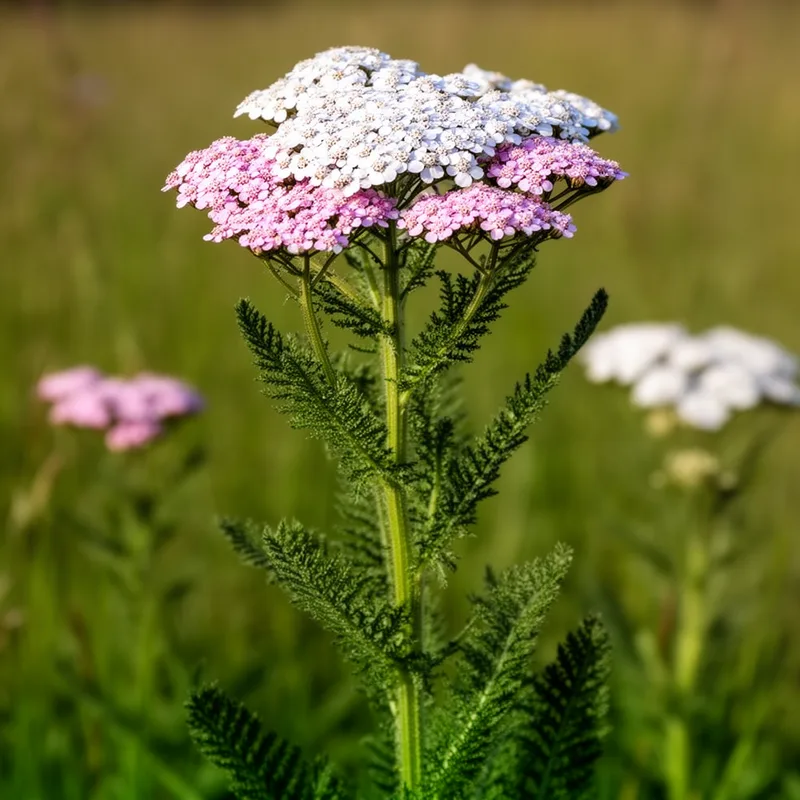
Achillea millefolium
- noun
- /əˈkɪliə ˌmɪlɪˈfoʊliəm/
- Specialized
- The Achillea millefolium blooms beautifully in summer.
- Achillea millefolium (yarrow)
Examples
-
Achillea millefolium is a popular choice in herbal gardens for its traditional medicinal uses.
-
Many meadows in Europe and North America are dotted with the white flower heads of Achillea millefolium.
-
The finely divided leaves of Achillea millefolium make it easily distinguishable from other wildflowers.
-
Look at the Achillea millefolium!
-
The herbalist recommended using Achillea millefolium for its soothing properties in traditional remedies.
-
In the wildflower garden, Achillea millefolium attracted many butterflies with its delicate white blossoms.
-
During our hike, we spotted Achillea millefolium growing among the tall grasses in the meadow.
Synonyms

 7
7.9
7
7.9

A common wild herb with feathery leaves and small white flowers often in meadows


 1
9.3
1
9.3
A plant with fine feathery leaves that often grows in meadows or water
A plant with small white flowers in flat clusters, called yarrow
Surface Forms
Morphology
achillea + millefolium
This is a Latin binomial (taxonomic) name that functions as a fixed label rather than a compositional English phrase; one constituent is not an English word and the whole form is a proper noun, so a B1 learner would not be able to infer the plant identity from the parts. Even though 'millefolium' etymologically means 'thousand‑leaved', that Latin knowledge is specialized and not available to average learners, making the expression effectively non-compositional and opaque.
Etymology
Achillea millefolium gets its name from Latin: mille means 'thousand' and folium means 'leaf', because the plant has many tiny, feathery leaves. One popular story says the hero Achilles used this plant to help heal wounds, which is why the name Achillea is linked to healing and why the plant, also called 'yarrow', is known for its many leaves and traditional medicine.