
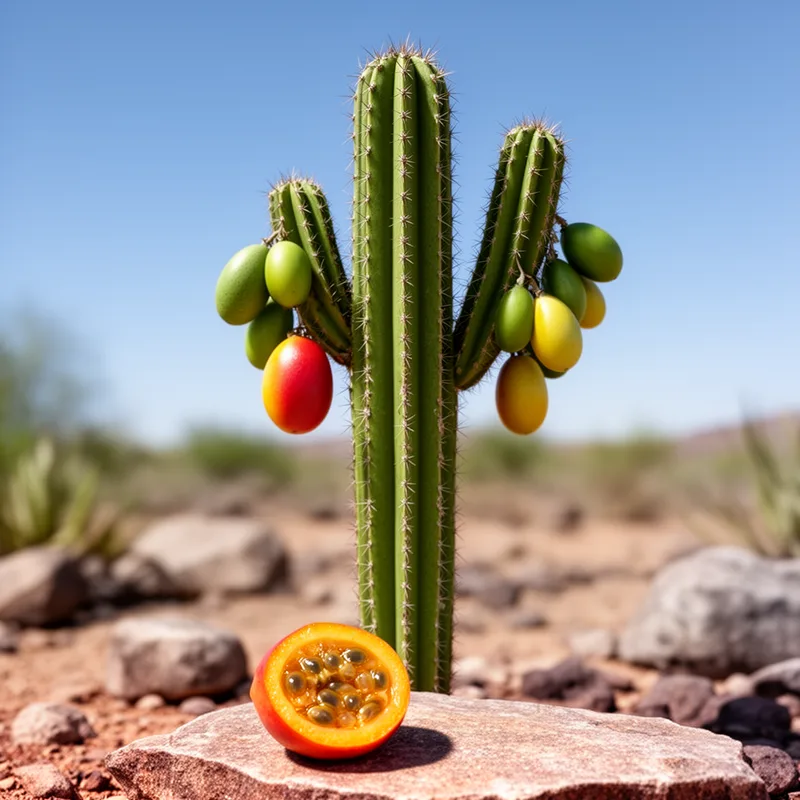
Acanthocereus tetragonus
- noun
- /ˌækənθoʊˈsɪəriəs ˌtɛtrəˈɡoʊnəs/
- Specialized
- Gardeners often cultivate Acanthocereus tetragonus for its ornamental value and edible fruit.
Examples
-
The Acanthocereus tetragonus thrives in arid regions and produces fruit that is enjoyed by locals.
-
Hikers in Texas might encounter Acanthocereus tetragonus growing wild among the rocks.
-
The Acanthocereus tetragonus is often called the night-blooming cereus.
-
Have you ever tasted the fruit of Acanthocereus tetragonus?
-
Many people enjoy the sweet, juicy fruit of the Acanthocereus tetragonus during the summer.
-
In the desert, you can find the Acanthocereus tetragonus cactus, which produces bright fruit that is delicious.
-
The Acanthocereus tetragonus is often cultivated in gardens for its ornamental appearance and tasty fruit.
Synonyms

A cactus that grows in dry places and makes a sweet, juicy fruit people eat

A cactus that grows in dry places and makes a sweet fruit
Surface Forms
Morphology
Acanthocereus + tetragonus
This is a Latin scientific name (binomial) functioning as a taxonomic label rather than a compositional English phrase; knowing the parts does not yield the full meaning. A B1 learner who knows 'Acanthocereus' might infer it is a cactus genus, but the species epithet 'tetragonus' is not a familiar English word (and the information about edible, juicy fruit is not derivable from the constituents), so the overall meaning would not be predictable.
Etymology
Acanthocereus tetragonus comes from words that describe its look: acantha means 'thorn' and cereus was used for tall, candle-like cacti, while tetragonus means 'four-angled'. So the name gives a clear image of a spiny, candle-shaped cactus with four sides that grows in dry places and produces edible fruit.

