

Abronia umbellata
- noun
- Specialized
- The rare Abronia umbellata blooms along the sandy coastline every spring.
Examples
-
Conservationists are working to protect Abronia umbellata from habitat loss due to urban development.
-
Have you seen the Abronia umbellata in bloom?
-
Beachgoers admired the vibrant flowers of Abronia umbellata scattered across the dunes.
-
The Abronia umbellata blooms beautifully along the coast.
-
Beachgoers admired the vibrant flowers of Abronia umbellata scattered across the dunes.
-
Conservationists are working to protect Abronia umbellata from habitat loss due to urban development.
-
The rare Abronia umbellata blooms along the sandy coastline every spring.
Synonyms
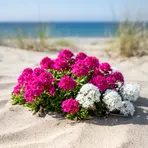
A low plant with clusters of deep pink or white flowers that grows on sandy areas near the sea
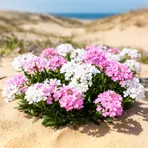
A low plant with groups of pink or white flowers that grows on sandy coasts
Surface Forms
Morphology
Abronia + umbellata
This is a scientific Latin binomial (genus + species) rather than a compositional English phrase; the second element 'umbellata' is a Latin botanical epithet (not a common English word) and the genus name functions as a proper noun. Even if a learner knew 'Abronia' glossed as a plant genus, a B1 learner who knows the surface constituents would not be able to derive the full descriptive meaning (prostrate flowering herb with clustered flowers) from those parts, so the term is not transparently interpretable.
Etymology
Abronia umbellata gets its name from old languages: Abronia may come from a Greek word meaning 'delicate', and umbellata comes from Latin for 'little umbrella', a picture of its umbrella-shaped flower clusters. That's why the name helps you imagine a low, delicate plant with round, umbrella-like blooms on the sandy shore.

