
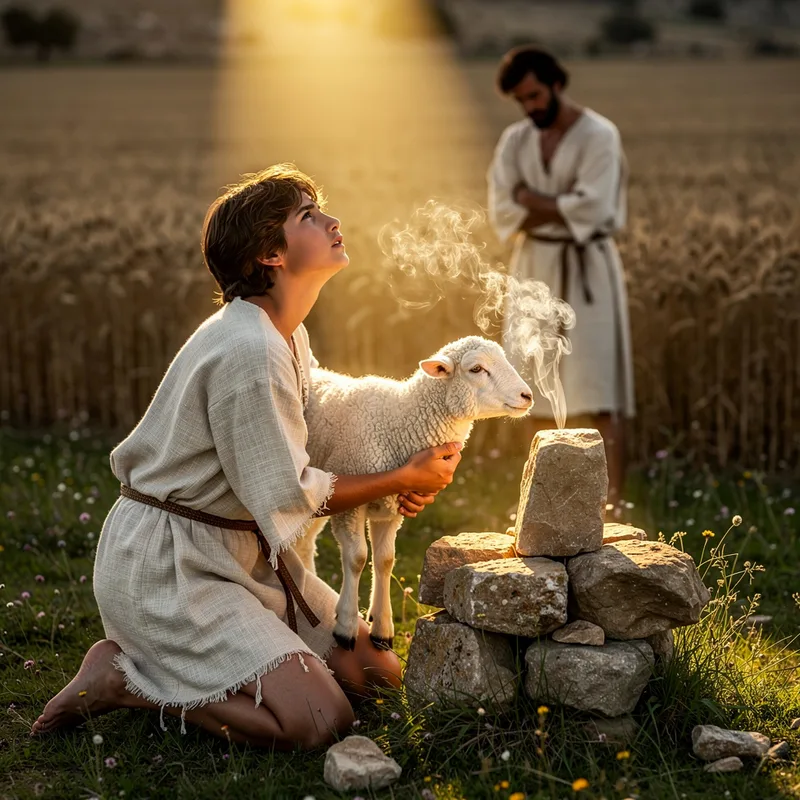
Abel
 16
6.3

- proper noun
- /ˈeɪbəl/
- Literature
- In the Bible, Cain killed his brother Abel out of jealousy.
- Cain and Abel
- murder of Abel
- brother Abel
Loading YouTube…
Watch on YouTubeWhy did, why did, why did government start after Cain killed Abel back in Genesis?
- Why did, why did, why did government start after Cain killed Abel back in Genesis?
- And I think the the two stories that follow the story of Cain and Abel detail that.
- OK, so in the story of Cain and Abel, Cain makes second rate sacrifices.
- But I want to speak about two brothers, Cain and Abel.
- Cain rebels against God, kills his brother Abel.
- So the first two humans in history are Cain and Abel.
- And the trouble with that is that we've had trade and slavery since Cain and Abel.
- And the story doesn't tell us why God accepts Abel's sacrifice and you know, isn't happy with with Cain's.
- When I look at a story like Cain and Abel, I think, well, the question did that happen begs the question, what do you mean by happen?
- And Cain, instead of changing, kills Abel, right?
- He's gone with Betray my trust on Cain and Abel.
Examples
-
Why was God so pleased with Abel's sacrifice and not Cain's?
-
Why did, why did Cain kill Abel?
-
Then he closed his hands around Abel and drew him close.
Academic text (2005) -
And God said to Cain, where is Abel, your brother?
-
Holmes: Brother Marstoke, what motivation would Brother Abel have had to kill you?
Fiction book (2002) -
The white man's hands lay on Abel's shoulders, and for a moment the white man stood still.
Academic text (2005) -
The story of Abel teaches important lessons about sacrifice and faith.
-
Many people are familiar with the tale of Abel and his brother Cain.
Surface Forms
Etymology
Abel comes from an old Hebrew name Hevel, which means 'breath' or 'vapour'. A helpful image is that a 'breath' is quick and fragile, and that fits the Bible story where Abel is the young son who dies early, making his life seem short and fleeting.