

ABO system
- noun
- /ˈeɪˌbiˈoʊ ˈsɪstəm/
- Specialized
- The ABO system divides human blood into four main groups based on antigens.
Examples
-
Incompatible matches in the ABO system can lead to dangerous transfusion reactions.
-
Doctors must always consider the ABO system when transfusing blood to patients.
-
The ABO system is crucial for blood transfusions.
-
Can you explain how the ABO system works?
-
Doctors must always consider the ABO system when transfusing blood to patients.
-
Incompatible matches in the ABO system can lead to dangerous transfusion reactions.
-
The ABO system divides human blood into four main groups based on antigens.
Synonyms

 2
3.2
2
3.2

A set of blood types people inherit from their parents that shows which blood they can receive
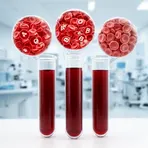
A system dividing human blood into A, B, AB and O groups by A and B substances on red cells

A system that divides blood into A, B, AB, and O by A and B proteins on red blood cells
Surface Forms
Morphology
ABO + system
While 'system' is a transparent, general noun, 'ABO' is a specialized acronym referring to blood-group antigens and is not a regular lexical item whose meaning a B1 learner can derive from its parts. Without prior domain knowledge of what 'ABO' denotes, the overall meaning 'a blood-group classification' cannot be inferred, so the expression is opaque to typical learners.
Etymology
ABO system gives a simple picture: imagine red blood cells wearing tiny 'name tags' marked A or B. If a cell has no tag it is O, and if it has both tags it is AB, so doctors use these tags to sort blood into the four groups A, B, AB, and O.