
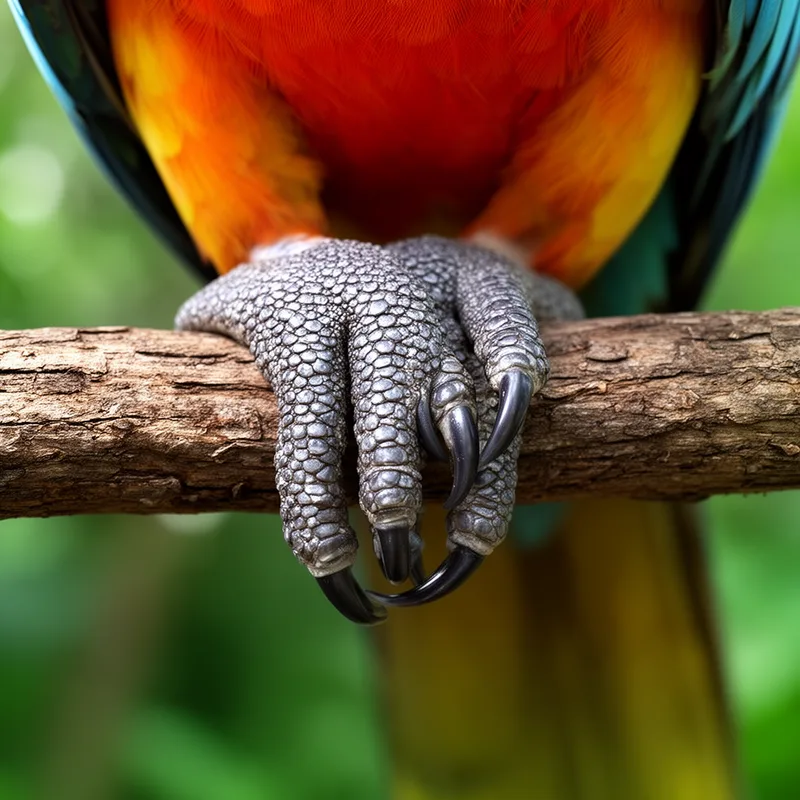
zygodactyl
- adjective
- /ˌzaɪɡəˈdæktɪl/
- Specialized
- The woodpecker's zygodactyl toes enable it to cling securely to tree trunks.
Examples
-
Parrots have zygodactyl feet, which help them grasp branches and climb.
-
The woodpecker's zygodactyl toes enable it to cling securely to tree trunks.
-
Ospreys are among the few birds with zygodactyl feet adapted for catching fish.
-
The zygodactyl feet of the parrot allow it to grasp branches effectively.
-
Many birds, such as owls, are zygodactyl in their foot structure.
-
Ospreys are among the few birds with zygodactyl feet adapted for catching fish.
-
Parrots have zygodactyl feet, which help them grasp branches and climb.
Compounds

- Specialized
A bird foot with two toes pointing forward and two pointing backward
Surface Forms
Morphology
Etymology
Zygodactyl comes from Greek parts zygo- meaning 'yoke' or 'joined' and -dactyl meaning 'finger' or 'toe', like in pterodactyl. So it means 'yoked toes' — toes paired or joined so that two point forward and two point backward, which explains the bird foot shape.

