
zoolatry
- noun
- /zuˈɑːlətri/
- Specialized
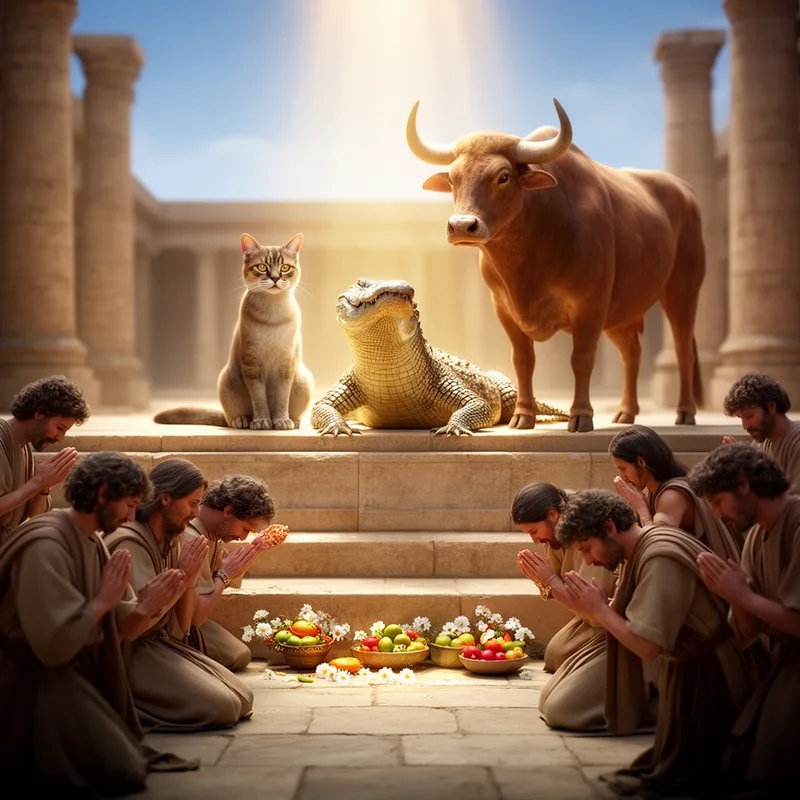
- Some ancient Egyptian religions practiced zoolatry, revering animals like cats and crocodiles as sacred.
Examples
-
Modern societies rarely engage in zoolatry, but it has been common throughout human history.
-
The anthropologist wrote extensively about zoolatry among indigenous peoples in South America.
-
Some cultures practice zoolatry as part of their religious beliefs.
-
The ancient Egyptians showed great zoolatry towards cats.
-
Many ancient cultures practiced zoolatry by worshipping animals as gods.
-
In ancient Egypt, zoolatry was evident as people revered cats and bull deities.
-
The concept of zoolatry can be seen in rituals where animals are considered sacred.
Synonyms

Treating animals as sacred beings in religion
How Devout


Surface Forms
Morphology
Etymology
The word zoolatry comes from Greek parts zoo- meaning 'animal' and -latry meaning 'worship', like in zoo and idolatry. So zoolatry means the worship or high respect of animals.