
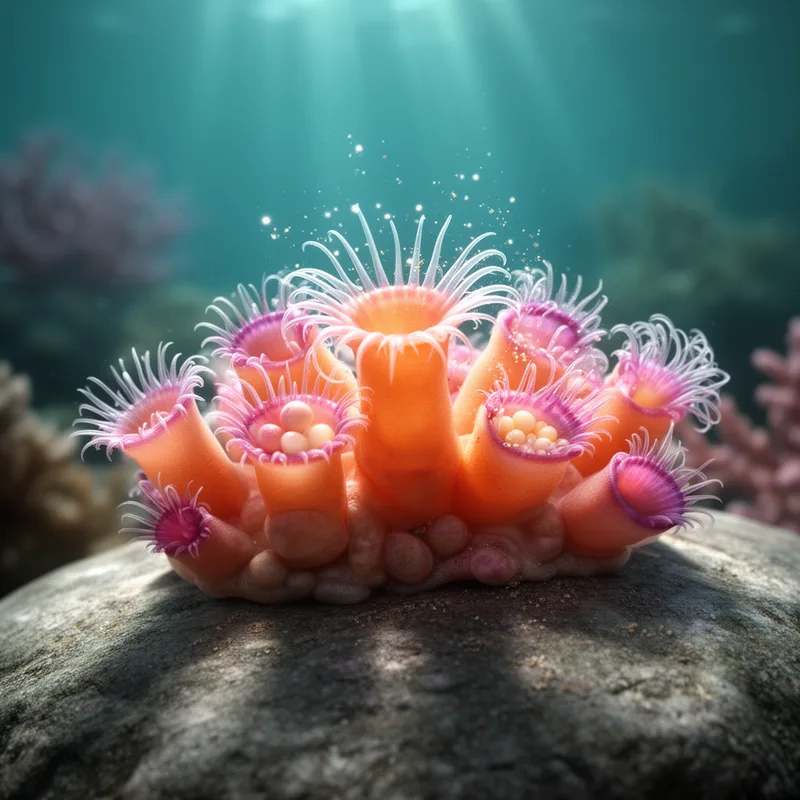
zooid


 1
9.9
1
9.9
- noun
- /ˈzuːɔɪd/
- Specialized
- Bryozoans are colonial animals that grow through asexual budding of modular units called zooids that remain attached to the parental colony (Figure 5).
Examples
-
Competition for space is therefore mediated by rapid increases in zooid numbers, and the competitive advantage should go to colonies that bud the fastest.
Academic text (1998) -
Each zooid in the bryozoan colony functions semi-independently while still being connected to its neighbors.
-
By this repeated motion, the little zooid could work up a remarkable speed in either direction.
Fiction book (1998) -
Somewhere in the wheelgrass, a nocturnal zooid called for its mate, and another answered.
Fiction book (1998) -
The marine biologist observed how each zooid within the colony reacted to changes in the environment.
-
As the colony expanded, the number of zooids increased, showcasing their unique ability to bud off from one another.
Synonyms
An individual animal in a colony like coral that forms without sex
Surface Forms
Morphology
Etymology
The word zooid comes from Greek parts zoo- meaning 'animal' and -oid meaning 'like', the same -oid you see in humanoid or asteroid. So a zooid is an 'animal-like' individual unit in a colony, a tiny animal connected to and working with others.