
zeta
 13
8.9

- noun
- /ˈzeɪtə/
- Specialized
- The zeta potential of fibroin at pH 7.0 is negative, as most of its portions are negatively charged.
- zeta potential
Loading YouTube…
Watch on YouTubeThat came from their planet, which turned out to be Zeta Reticuli.
- That came from their planet, which turned out to be Zeta Reticuli.
Examples
-
And that is to know where this Zeta function where it's zero.
-
A drop in B with C fixed also raises zeta.
Academic text (2018) -
Consequently, the particles' zeta potential became positive.
Academic text (2018) -
There are some easy tests that one can do with zeta zeros to increase one's level of confidence.
Blog text (26) -
Riemann explained later gave a rigorous theory using his Zeta function, a theory which involved things like complex numbers.
-
The initiative supported the Zeta Tau Alpha Foundation, which raises money for breast cancer awareness and education.
Blog text (5) -
The key to maximizing the surcharge savings is to meet the zeta potential of the wastestream in an efficient manner.
Academic text (1998) -
In 1859, the German mathematician Bernhard Riemann was the first to treat the zeta function as a function of a complex variable z.
Fiction book (2001) -
In mathematics, the Riemann zeta function is critical for understanding the distribution of prime numbers.
-
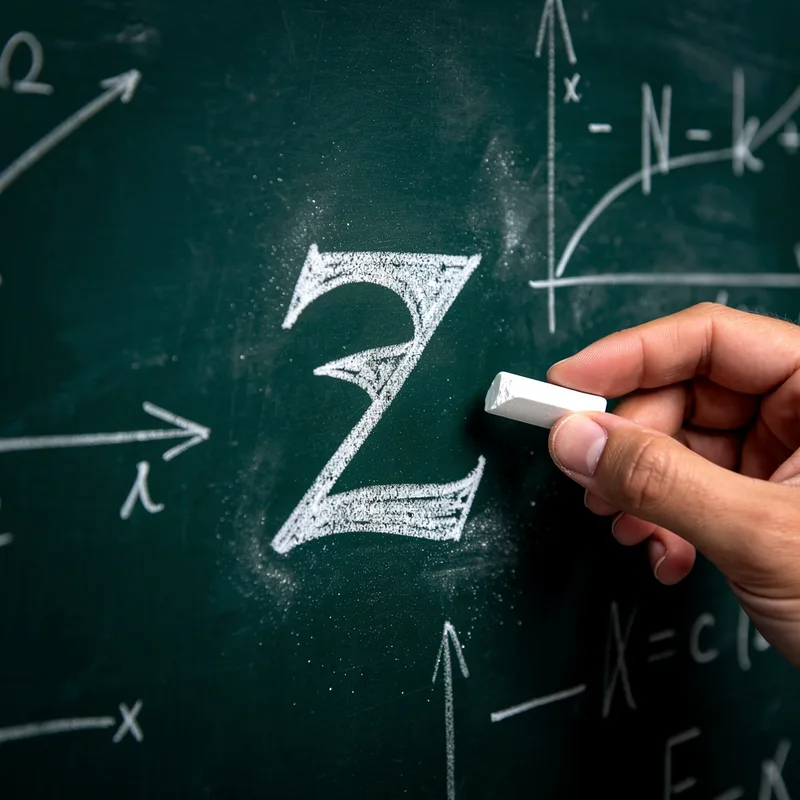
The zeta symbol is the sixth letter of the Greek alphabet and is often used in scientific equations.
Surface Forms
Etymology
The word zeta is the Greek name for the sixth letter and is often used as a symbol in math and science. It comes from an older Middle Eastern letter called zayin, which meant 'weapon' or 'sword', so thinking of the simple name Z or a small 'weapon' image can help you remember that zeta is just the Greek letter used as a sign in equations.