
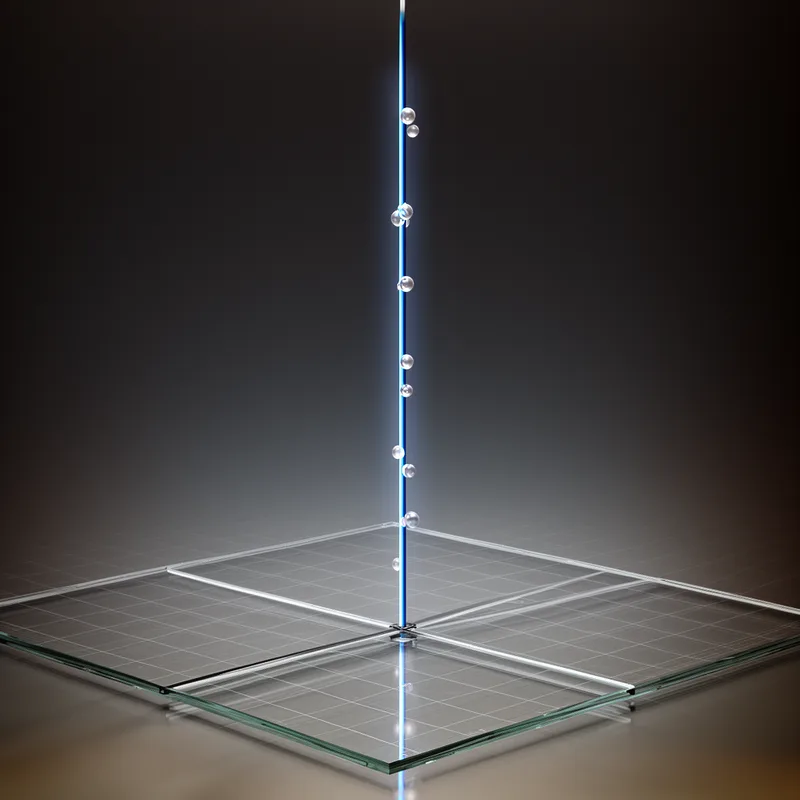
z-axis
 1
6.0

- noun
- /ziː ˈæksɪs/
- Specialized
- Models are printed with z-axis (layer height) resolution between 50 m and 500 m. Increasing the z-axis resolution of a model increases its production time.
- z-axis resolution
Loading YouTube…
Watch on YouTubeLZ is rotations around the Z axis, so they change Phi.
- LZ is rotations around the Z axis, so they change Phi.
Examples
-
3DPS is more precise than GPS and works on a Z-axis.
-
Increasing the z-axis resolution from 250 m to 100 m provided little benefit to dimensional accuracy.
Academic text (2015) -
So this is the Z axis here, this is the X axis.
-
So we have the Z axis, we have the X axis and we have the Y axis.
-
For tool movement in the Z axis, use absolute-based numbers.
Academic text (2011) -
Travel in the x and y axes is 24 in., and 1.97 in. in the z axis.
Academic text (1998) -
It's so fast, it has this stable cube frame and the Z axis moves down as the print builds up, which allows for very stable printing.
-
Printing at a 250 m z-axis resolution appears to best balance production time with accurate reproduction of the craniofacial skeleton.
Academic text (2015) -
The foam is fixed to a controlled rotary platform while the cutting tool is translated vertically along the z-axis and horizontally along a radius of the rotating table.
Academic text (1992) -
In a three-dimensional graph, the z-axis extends vertically, representing depth.
Surface Forms
Morphology
Etymology
Z-axis names the third line in a three-dimensional graph, the line that usually shows depth or height. The axis part comes from a Latin word meaning 'axle' or 'line', like the axle of a wheel, and because people use the letters x, y, z in order, the z-axis is the third line that shows depth or height.