
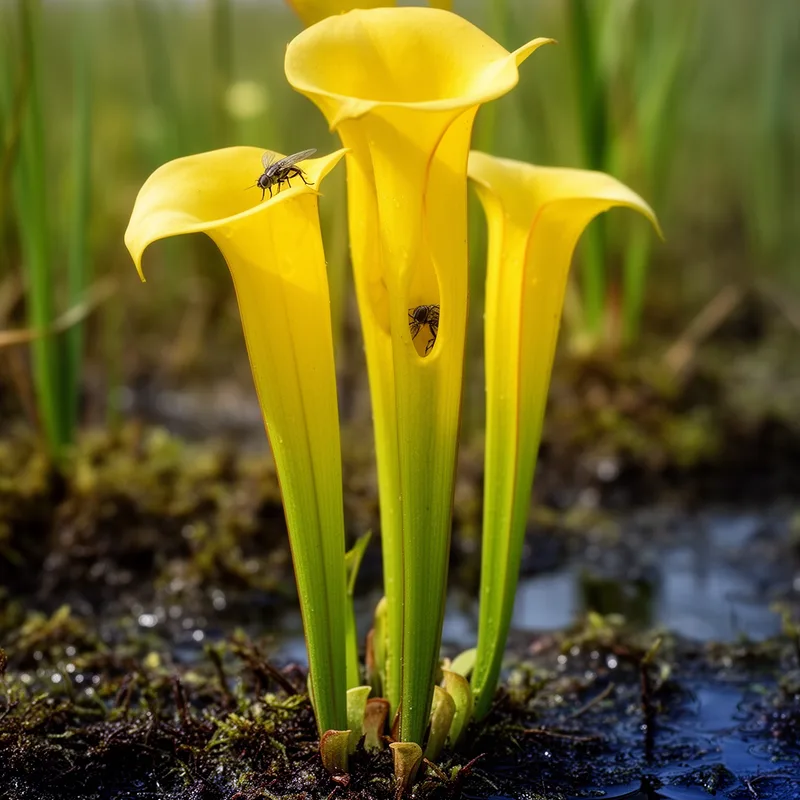
yellow trumpet
- noun
- /ˈjɛloʊ ˈtrʌmpɪt/
- US
- The yellow trumpet thrives in boggy areas across the southeastern United States.
Examples
-
Conservationists monitor yellow trumpet populations due to their habitat's vulnerability.
-
Gardeners are drawn to the unusual shape of the yellow trumpet pitcher plant.
-
The yellow trumpet attracts many insects.
-
Have you seen a yellow trumpet in the garden?
-
The yellow trumpet is known for its striking appearance and ability to trap insects.
-
In the wetlands, the yellow trumpet pitcher plant can often be seen flourishing.
-
Botanists study the yellow trumpet to understand its unique adaptations to nutrient-poor soils.
Synonyms
A plant that traps insects in tall yellow cup-shaped leaves
A tall yellow plant that catches insects in upright tube-like leaves with wide mouths
A plant from the southeastern United States with tall yellow pitcher-shaped leaves that trap insects
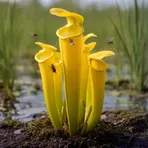
A plant with upright yellow, trumpet-shaped tubes that catch insects
Surface Forms
Morphology
yellow + trumpet
The noun phrase describes a yellow thing with a trumpet-like shape, so a learner who knows 'yellow' (a color) and 'trumpet' (the instrument/shape) can infer it is a yellow, trumpet-shaped plant or pitcher. Using 'trumpet' to indicate shape is a common, cross-linguistically transparent compositional pattern, so the overall meaning is directly derivable from the constituents.
Etymology
Yellow trumpet gets its name from the plant's long, yellow pitchers that look like small trumpets. So the name describes a pitcher plant with yellow, trumpet-shaped 'mouths' that catch insects.

