
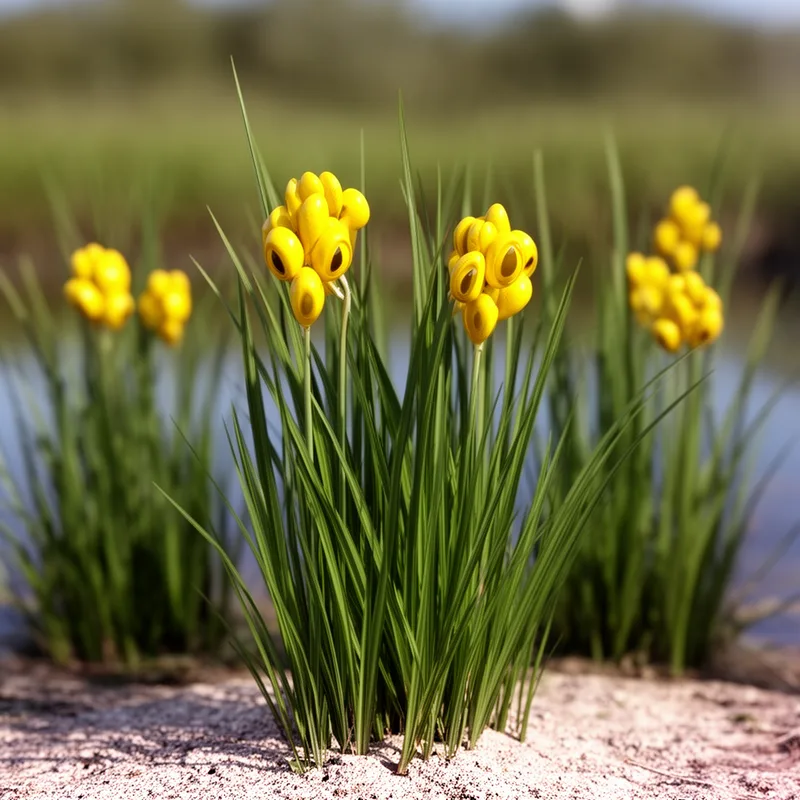
yellow-eyed grass
- noun
- US
- The sandy soils of the region are home to rare yellow-eyed grass species.
Examples
-
The bright yellow centers of yellow-eyed grass make it easy to recognize in the wild.
-
Botanists identified several clusters of yellow-eyed grass near the wetlands.
-
The yellow-eyed grass blooms beautifully in spring.
-
Many yellow-eyed grasses thrive in sandy soils.
-
In the nature reserve, we spotted the vibrant yellow-eyed grass with its distinctive yellow flower centers.
-
The gardener decided to plant yellow-eyed grass in the meadow for its unique blooms and its ability to thrive in sandy soil.
-
During our hike, we admired the patches of yellow-eyed grass swaying gently in the breeze, each flower resembling a tiny sun.
Surface Forms
Morphology
yellow-eyed + grass
The phrase is a descriptive compound: 'yellow-eyed' (yellow + eyed) modifies 'grass', so the meaning 'a grass with yellow, eye-like centers' can be directly inferred from the known words. This color+feature naming pattern is transparent and common in English (and across languages), so a B1 learner who knows the constituents would readily understand it.
Etymology
Yellow-eyed grass: The name yellow-eyed grass comes from the plant's bright, round yellow centers that look like little 'eyes' in the grass. So the parts yellow, eyed, and grass describe its look, and the name refers to those grass-like plants with yellow 'eyes'.

