
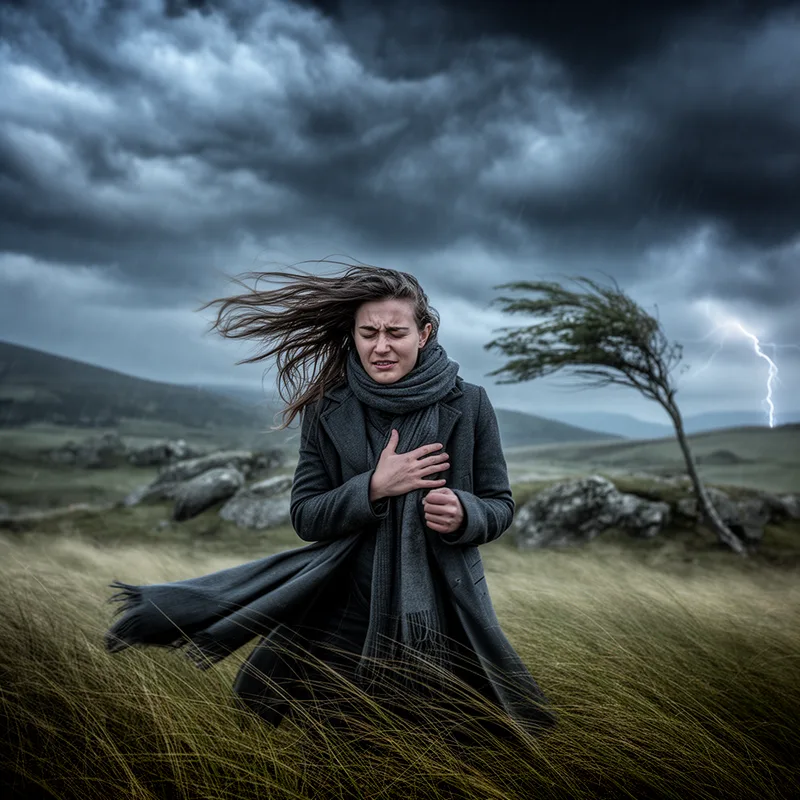
wuthering
 1
9.9

- adjective
- Archaic
- The wuthering winds howled through the trees.
Examples
-
A wuthering sky loomed over the moors, echoing the characters' inner turmoil.
-
The storm created a wuthering atmosphere outside.
-
The novel describes a wuthering landscape where the wind never seems to rest.
-
Her wuthering feelings made it hard for her to find peace after the argument.
-
A wuthering storm swept across the moors, shaking the old stone cottage.
-
The wuthering winds rattled the windows, creating an eerie sound in the night.
-
As the evening progressed, a wuthering chill filled the air, reminding everyone of the impending storm.
Synonyms
 222
2.6
Very strong in color, sound, movement, or feeling
 6
8.4
Full of strong, stormy feelings, often with loud arguments
Antonyms


How Stormy

Surface Forms
Morphology
wuthering = wuther (opaque) = wuther + ing
The base 'wuther' is archaic and not recognizable to most learners, making the derivation opaque.
Etymology
The word wuthering comes from a northern English verb wuther, a word that copies the loud, roaring sound of wind and meant 'to blow with a strong, wild noise'. So wuthering describes a place or feeling that is wild, stormy, or full of troubled feelings.