
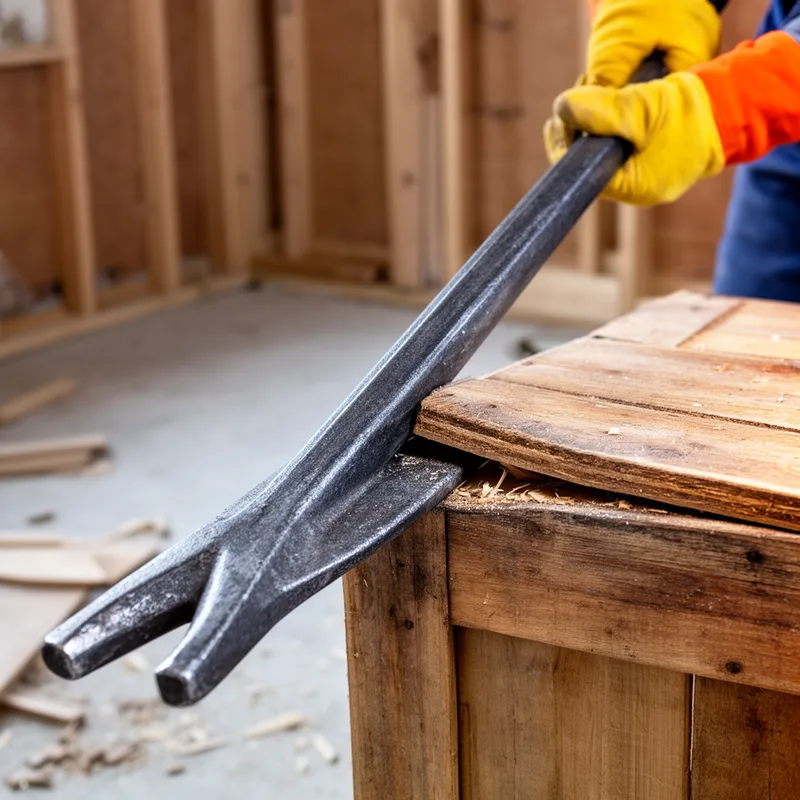
wrecking bar


 1
6.5
1
6.5
- noun
- /ˈrɛkɪŋ bɑr/
- To remove the old tiles, you will need a strong wrecking bar to pry them off.
Examples
-
He used a wrecking bar to break down the old wooden door during the renovation.
-
Need a wrecking bar to pop those doors.
Blog text (9) -
Using a wrecking bar he carried in the pickup, Harmon pried loose the door's hasp.
Fiction book (1991) -
Kevin and Zipper, if one of their junker cars doesn't start on the third turn of the key, leap out, seize a wrecking bar, and smash all the windows.
Fiction book (1997) -
The construction crew employed a wrecking bar for demolition work on the abandoned building.
Synonyms
 45
2.9
45
2.9
A heavy metal bar with a curved end used to force things open and pull out nails
 4
8.4
4
8.4
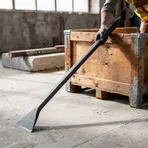
A long metal bar with a flat end used to lift or move heavy things
 3
4.8
3
4.8
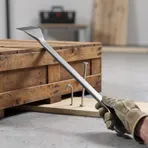
A heavy metal tool with a flat pointed end used to lift things and pull nails
 1
7.4
1
7.4
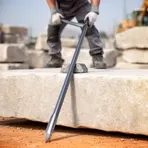
A long strong metal tool with a pointed end used to lift heavy things
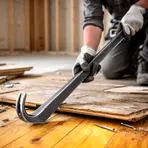
A long heavy metal tool with a flat chisel end for prying and a curved claw end for pulling nails
How Heavy-Duty

Surface Forms
Morphology
The noun combines 'wrecking' (demolition/tearing down) with 'bar' (a long rigid piece), so the overall meaning of a bar used for wrecking or prying is directly derivable from its parts. This is a straightforward compositional noun-noun compound following common cross-linguistic patterns, making it immediately understandable to a B1 learner who knows the constituents.
Etymology
Wrecking bar comes from the tool's job: a strong bar used to 'wreck' buildings, boards, or other parts by prying them apart. That's why the name means a heavy iron bar for breaking and demolition.