
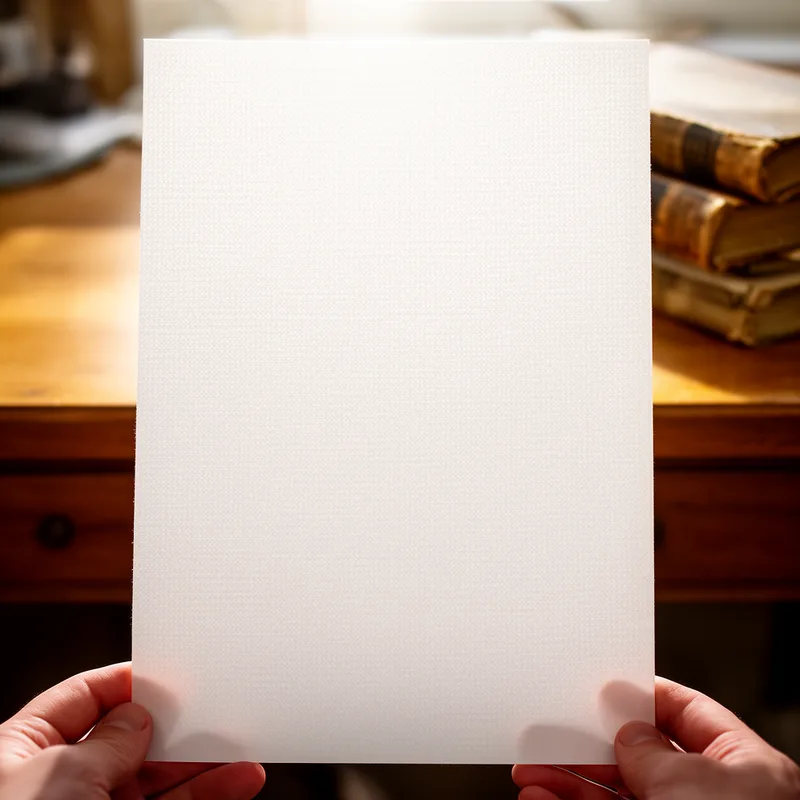
wove paper
- noun
- Specialized
 :
papel de trama
:
papel de trama
- Unlike laid paper, wove paper does not show prominent lines when held up to the light.
- etch on wove paper
- watercolor on wove paper
- graphite on cream wove paper
Examples
-
The artist prefers wove papers for sketching.
-
Collectors often prefer wove paper in antique books because of its durability and appearance.
-
The publisher selected wove paper for the new edition to create a smooth writing surface.
-
I love the texture of wove paper for my art projects.
-
The artist used wove paper for her latest watercolor painting, as it allowed for smooth brush strokes.
-
He preferred to print his photographs on wove paper because it had a uniform texture that enhanced the images.
-
The invitation was elegantly designed on thick wove paper, giving it a refined and professional look.
How Textured


Surface Forms
Morphology
The phrase 'wove paper' is directly compositional: 'wove' (from 'weave') modifies 'paper' to indicate paper that is woven or has a woven/mesh-like texture, so a learner who knows 'weave' and 'paper' can infer this basic meaning. This verb→adjective + noun pattern is common in English (and mirrored in many languages), so a B1 learner would grasp the general sense even if they might miss specialized papermaking distinctions.
Etymology
Wove paper gets its name from early paper makers who made sheets on a screen woven like cloth, so the paper showed a very faint, even weave instead of paper with clear lines. That's why wove paper now means paper with a smooth, even surface and 'no lines' when you hold it to the light.