
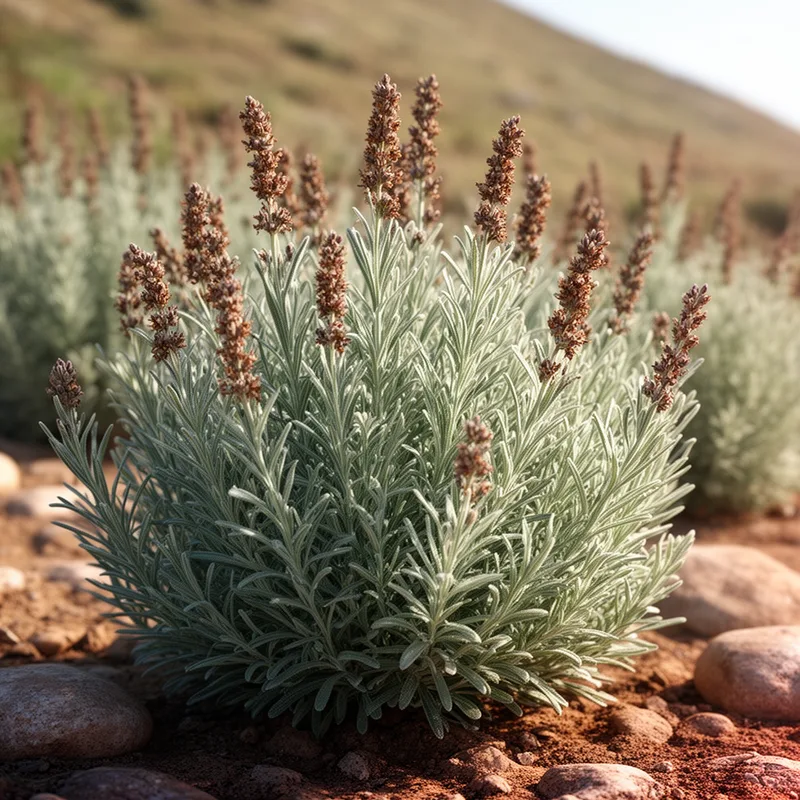
wormwood sage
- noun
- /ˈwɜrmˌwʊd seɪdʒ/
- Specialized
- The gardener planted wormwood sage along the dry, sunny border for its aromatic foliage.
Examples
-
The wormwood sage thrived in the well-drained soil of the northern hillside.
-
In traditional herbal medicine, wormwood sage has been valued for its potential therapeutic properties.
-
The wormwood sage grows beautifully in my garden.
-
Have you seen the wormwood sage in bloom?
-
In traditional herbal medicine, wormwood sage has been valued for its potential therapeutic properties.
-
The wormwood sage thrived in the well-drained soil of the northern hillside.
-
The gardener planted wormwood sage along the dry, sunny border for its aromatic foliage.
Synonyms
A perennial plant with soft, fragrant leaves and brownish-yellow flowers

A small aromatic plant with silvery green leaves and small brownish flowers that grows in dry northern areas
Surface Forms
Morphology
Both constituents are plant names, and the compound noun follows the common English pattern X Y meaning 'a kind/type of Y associated with X' (i.e., a sage related to or resembling wormwood). Although the term is botanical and somewhat specialized, its meaning is directly inferable from knowing 'wormwood' and 'sage', so a B1 learner who knows both words would readily guess it denotes a particular plant.
Etymology
Wormwood sage likely comes from its two parts: the bitter wormwood, long used to treat stomach worms, and the soft, grey sage leaves people know. This clear image — a bitter, aromatic herb with sage-like leaves — explains why the name is used for this silky-leaved perennial today.

