
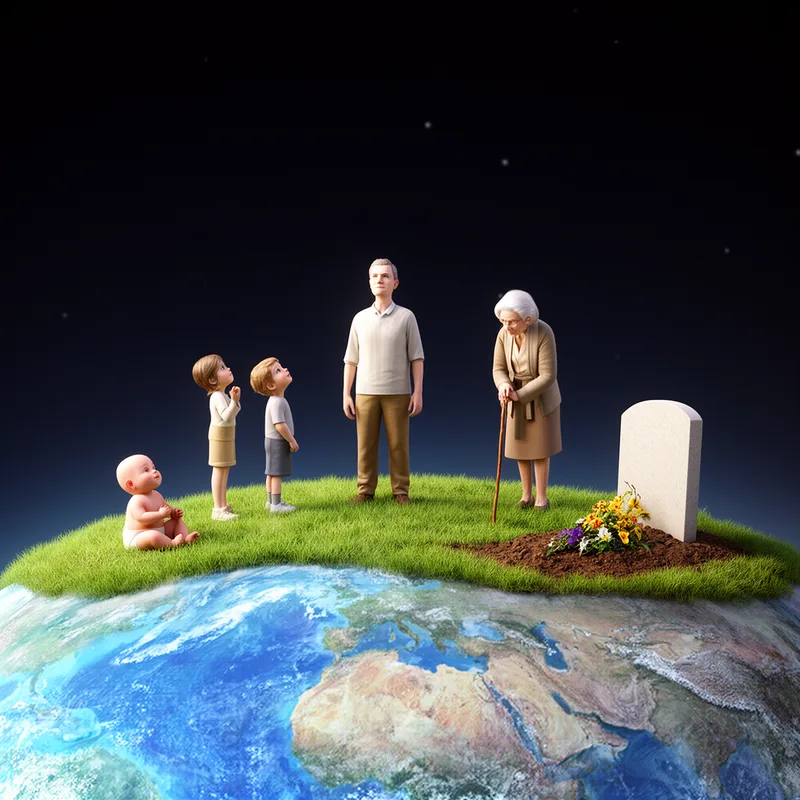
worlder
- noun
- /ˈwɜrldər/
- Archaic
- The journey transformed him from an ordinary man to a seasoned worlder, appreciating the beauty of the world around him.
Examples
-
"Welcome home, Lady Harrington," he said, and felt her long, slender fingers tighten about his with the careful strength of a native heavy-worlder.
Fiction book (2001) -
The idea here seems to be to account for the fact that people from some northern parts of the USA don't say 'please' and 'thank you' in restaurants, by explaining that they are complying with an alternative New World system of politeness, which is incompatible with that of us Old Worlders because it is founded on 'solidarity' rather than 'deference.'
Blog text (25) -
As a true worlder, she felt comfortable navigating diverse cultures and embracing new experiences.
-
Being a worlder meant he valued the treasures of everyday life and the connections he made with others.
Synonyms

 4
9.7
4
9.7

A person who lives on Earth, not on another planet
Surface Forms
Morphology
Etymology
Worlder comes from world ('the earth') and -er ('one who'), and in old or poetic use it simply meant 'a person who lives in the world'. That's why a writer might call a human a worlder to show their ordinary, mortal life in stories or poems.