
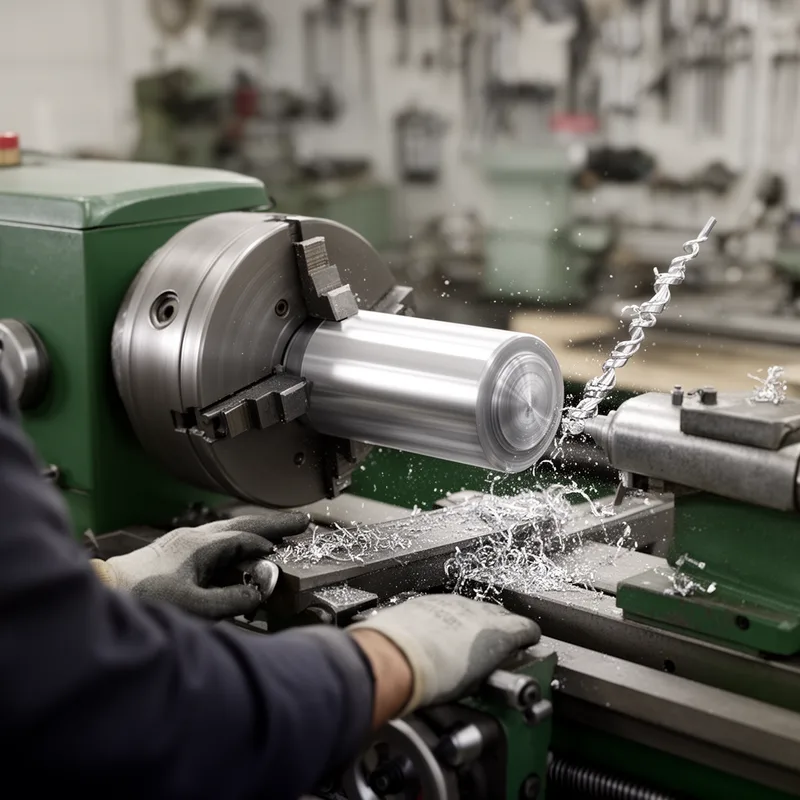
workpiece


 1
6.3
- noun
- /ˈwɜrkˌpis/
- Specialized
- ECM places less heat and mechanical stress on the workpiece than mechanical machining does; such stresses can damage a part's microstructure.
- hold the workpiece
- tool and workpiece
- workpiece surface
Examples
-
For conductive applications, the hot plate transfers heat directly to the workpiece.
Academic text (1996) -
The plate heats the air as it flows through, then preheats any workpiece, even boards with irregular surfaces.
Academic text (1996) -
I use rubber floor mats to level up the workpiece and make it less slippery.
-
Electrons flow across the narrow gap from negative to positive, dissolving the workpiece into the shape as the tool advances into it.
Academic text (2001) -
The DC power supply charges the spindle negatively and charges the workpiece positively.
Academic text (2001) -
Pressures are frequently 20 psi or less, depending on the area of contact between the wheel and the workpiece, according to Everite.
Academic text (2001) -
The basic components of ECM are the workpiece, the conductive tool, a recirculating electrolyte, and a power source.
Academic text (2001) -
The grinder allows simultaneous precision finishing on both sides of the workpiece and does not require special workholding chucks.
Academic text (1996) -
An abrasive slurry produces the cutting action because of the oscillations of the tool impacting the abrasive against the workpiece.
Academic text (2007) -
Clamp a second leg to the workpiece for extra support.
Antonyms


How Finished
- Specialized
33
1.0
 448
3.4
- Specialized
1
6.3
3
4.9
- Specialized
50
2.8
Surface Forms
Morphology
Etymology
Workpiece comes from the simple words work ('to do a job') and piece ('a part or small bit'). So it literally means 'a part that is being worked on', and today it refers to the metal or wood part a machine or person shapes in a workshop.