

to work out
 155
2.0
155
2.0

- phrasal verb
- /wɜrk aʊt/
- To improve her overall health, she tries to work out at the gym three times a week.
- work out at the gym
Loading YouTube…
Watch on YouTubeLike eat with me and let's work out together at my pace.
- Like eat with me and let's work out together at my pace.
- What is your favorite music to work out to Simple T pain.
- So going to the gym, working out for an hour, great.
- When you first started working out, what was the reward?
- Less phone screen sucking and more working out combatives.
- OK, well, why do we recommend working out in particular with weights?
- Look, every time I start working out really hard, I always get hurt.
- I'm able to work out, lift weights.
- They ask me, Alex, should you work out with a mask on or off.
- How long have you ever known me not to work out every day?
- I teach women to lose fat through working out and exercising.
- You guys, you land, you work out, you train.
Examples
-
After several months, he began to work out in the gym.
Academic text (1993) -
So now I go and work out twice a week.
-
Look, every time I start working out really hard, I always get hurt.
-
I just came here to work out.
-
How often do you work out? - Three, four times a week.
-
I'm going to work out.
-
I'm working out with my dad!
-
A personal trainer was available, but Leon preferred to work out using his own routine.
Fiction book (1998) -
You don't have to work out two hours a day or join the soccer league to enjoy feeling strong.
Academic text (2018) -
She was teaching moms how to work out with their kids.
Synonyms
 442
1.0
442
1.0
To exercise to get ready for a sport or event
 114
1.0
114
1.0
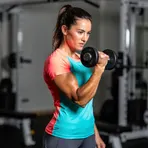
Do physical activity to make your body stronger and healthier
 8
3.6
8
3.6
To go to the gym to exercise
Antonyms

How Intense

Surface Forms
Morphology
work + out
The sense 'to exercise' is plausibly connected to 'work' (physical effort) with the particle 'out' adding a sense of exertion or completion, so a learner who knows the constituents could reasonably infer a gym/exercise meaning. However, 'work out' is a polysemous phrasal verb (also meaning 'solve' or 'turn out well') and the exact gym-specific reading is not strictly compositional or universally mirrored across languages, making the connection only partially predictable.
Etymology
Work out for exercise comes from making your body 'work' so muscles get used and become stronger. So to work out means 'to exercise'.