
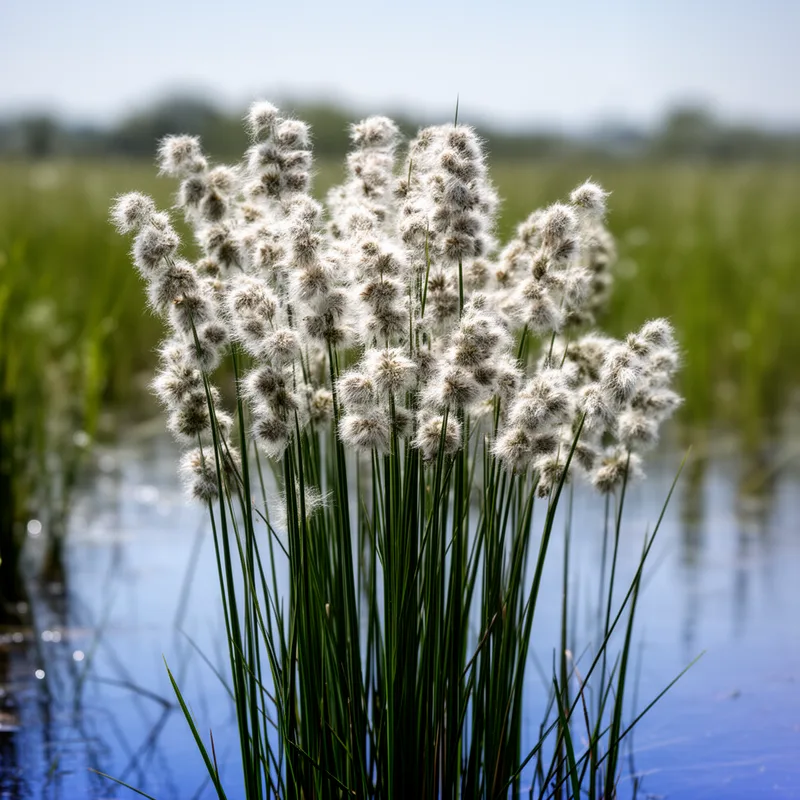
wool grass
- noun
- US
- In the wetlands of eastern North America, wool grass grows in clusters, contributing to the rich biodiversity of the area.
Examples
-
The marsh was dotted with patches of wool grass swaying in the breeze.
-
In wet meadows, wool grass provides habitat for many small animals.
-
Botanists study wool grass for its unique, woolly seed heads.
-
The wool grass swayed gently in the breeze.
-
I saw patches of wool grass in the wetlands.
-
The fluffy, clustered spikes of wool grass make it an interesting plant for gardeners seeking unique textures.
-
During our hike, we noticed that the wool grass was particularly vibrant after the rainy season.
Synonyms

A tall grass-like plant with many woolly flower clusters that grows in wet places in eastern North America
Surface Forms
Morphology
The noun compound transparently signals a grass that is wool-like — combining 'wool' (soft, fluffy) with 'grass' gives the clear idea of a grass with woolly or fluffy appearance, so a B1 learner who knows both words can infer the general concept. However, the specific botanical details (tall habit, white-ribbed leaves, plume-like flower heads like pampas grass) are not fully predictable from the constituents, so the relation is only partially transparent.
Etymology
Wool grass comes from a grass-like plant whose many small seed heads form soft, woolly tufts on the grass. People saw the clumps of wool and used that picture, so the name now means 'a plant with woolly seed heads'.

