
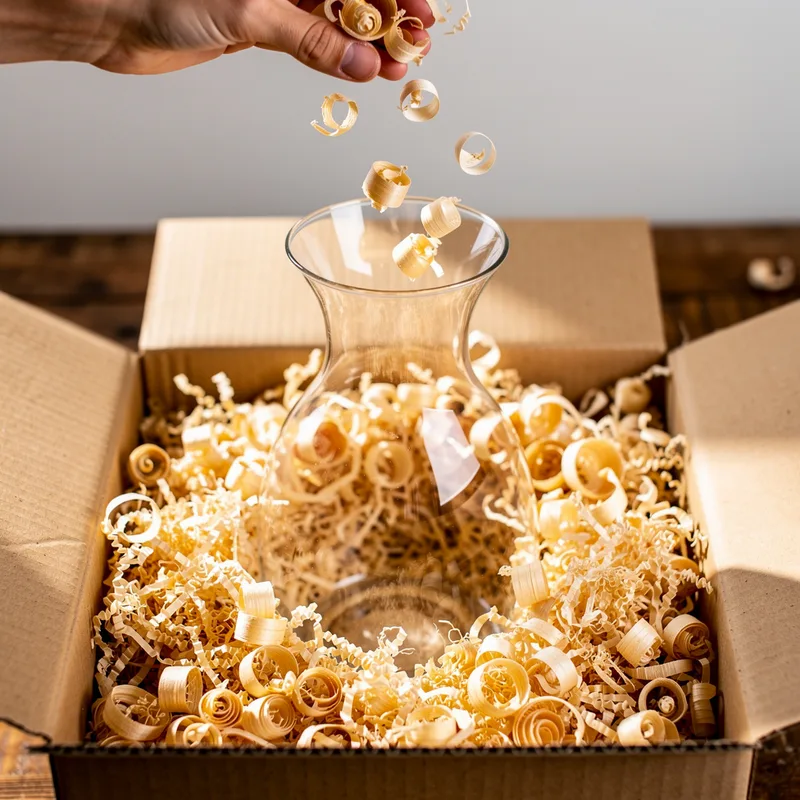
wood shavings
 1
2.0
1
2.0

- noun
- /wʊd ˈʃeɪvɪŋz/
- I photographed these wood shavings just for you.
Examples
-
There was another barn I used for breeding, the floor there covered with soft wood shavings, the walls padded.
Fiction book (1994) -
Wood shavings and recycled compost are used as amendments.
Academic text (1998) -
There are wood shavings in the pit.
Fiction book (1994) -
I was picking up wood shavings and telling myself that all work had dignity if it paid you enough to make your rent.
Fiction book (1995) -
Thomas brushed wood shavings from his shirt.
Fiction book (2002) -
There was a whiff of wood shavings and glue.
Fiction book (1997) -
There were wood shavings on the floor from the rocking horse he had been finishing for her youngest child.
Fiction book (1997) -
Roger Templeton sat in the corner by a small pile of wood shavings and looked up when he came in.
Fiction book (1999) -
Amendments used in the mix include municipal leaves, short paper fiber, sawdust, and wood shavings.
Academic text (1999) -
When preparing the horse's stall, the stable owner spread fresh wood shavings on the ground for bedding.
Synonyms
 16
2.0
16
2.0
A thin piece cut from a surface, like wood or chocolate
 3
9.9
3
9.9
Thin curled wood shavings used to fill and protect items when packing
How Fine

Surface Forms
Morphology
The meaning ‘thin, curled pieces of wood’ is directly and transparently derived from combining 'wood' (the material) with 'shaving' (a thin curled fragment produced by cutting). This noun + material composition is common cross-linguistically (e.g., Spanish 'virutas de madera', French 'copeaux de bois') and follows standard English compounding patterns, so a B1 learner who knows both words will readily understand it.
Etymology
Wood shavings comes from shaving wood, leaving thin, curly shavings when someone cuts wood with a tool. So, because these soft curls were often used as 'bedding' for animals or as 'packing' to protect items, the phrase now means those thin, curled pieces used for stuffing or animal bedding.