
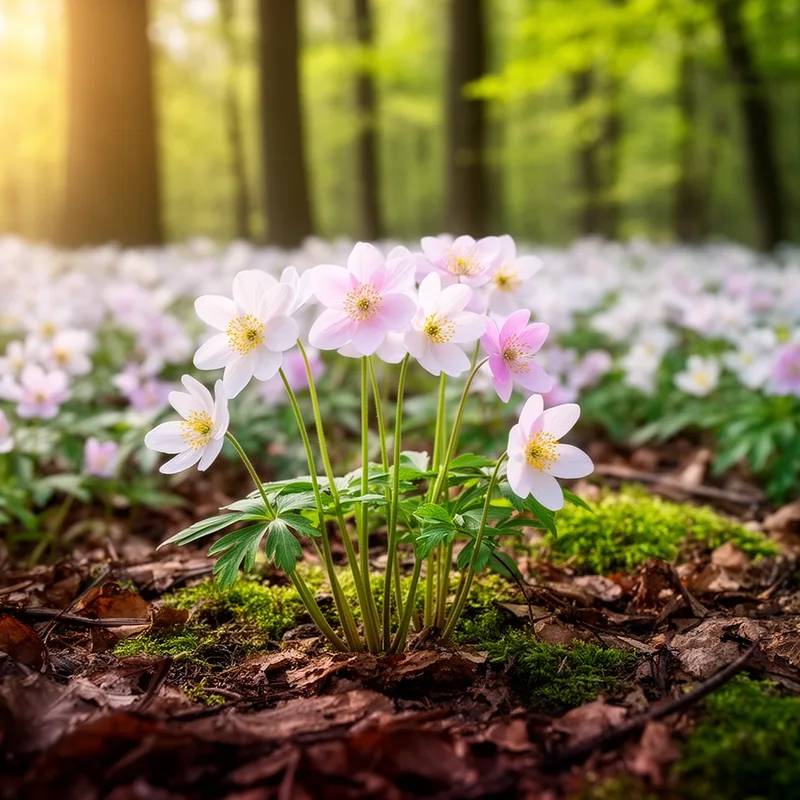
wood anemone
- noun
- /wʊd əˈnɛməni/
- UK
- The delicate white petals of the wood anemone open to the morning sun.
Examples
-
We spotted several wood anemones while hiking through the old woodland.
-
The wood anemone blooms in early spring.
-
In early spring, the forest floor is carpeted with wood anemone blooms.
-
I saw a beautiful wood anemone during my hike.
-
In spring, the wood anemone blooms, carpeting the forest floor with its delicate white flowers.
-
The wood anemone is often one of the first flowers to appear in the woodland during the early months of the year.
-
Walking through the woodland, we admired the wood anemone, which added beauty to the lush greenery.
Synonyms



 1
8.9
1
8.9
A small forest plant with pretty flowers and divided leaves

A small European woodland plant with single white flowers that cover the ground in spring

A small North American wildflower with a single white flower slightly pink, found in eastern woods

A wild white flower with one light pink-tinged bloom that grows in eastern North American woods
A woodland plant with showy flowers and divided leaves
Surface Forms
Morphology
The compound combines 'wood' (woodland) + 'anemone' (a type of woodland flowering plant), so its meaning — an anemone that grows in woods — is directly derivable from the parts. This habitat-based compounding pattern is regular and cross-linguistically common, making the term immediately understandable to a B1 learner who knows both constituents.
Etymology
Wood anemone combines wood (where it grows) and anemone, an old word meaning 'windflower' because the small white blooms often seem to move in a light breeze. So the name paints a simple picture—a little wildflower in the woods that opens and sways in the wind, which helps you remember the plant.