
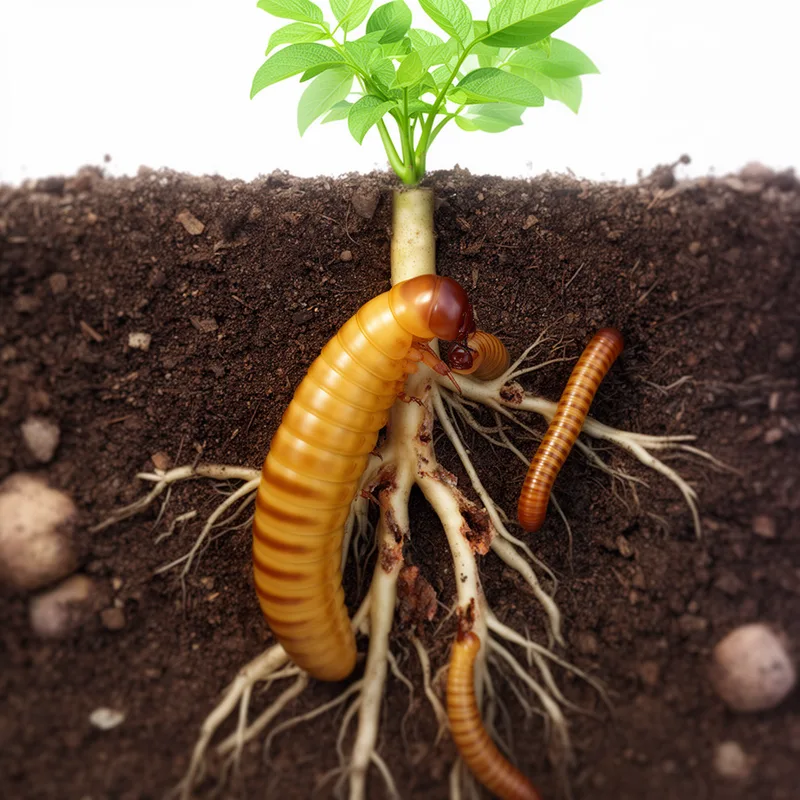
wireworm


 1
9.6
- noun
- /ˈwaɪərˌwɜrm/
- Specialized
- Farmers are worried about the wireworms in their crops.
Examples
-
The farmer discovered that wireworms were damaging the potato crop by eating their roots.
-
Gardeners often check the soil for wireworms before planting sensitive vegetables like carrots.
-
Effective control measures are needed to prevent wireworm infestations in newly planted fields.
-
The wireworm infested the cornfield last summer.
-
The wireworm is a common pest that damages the roots of many crops.
-
Farmers often struggle with the wireworms that attack their fields in the spring.
-
Identifying the wireworm early can help prevent serious damage to your plants.
Surface Forms
Morphology
Etymology
Wireworm comes from how the insect looks: people joined wire 'thin metal thread' and worm 'small long animal' because the larva is long, thin and quite hard like a wire. So wireworm means the tough, root-eating larva that can damage crops.