
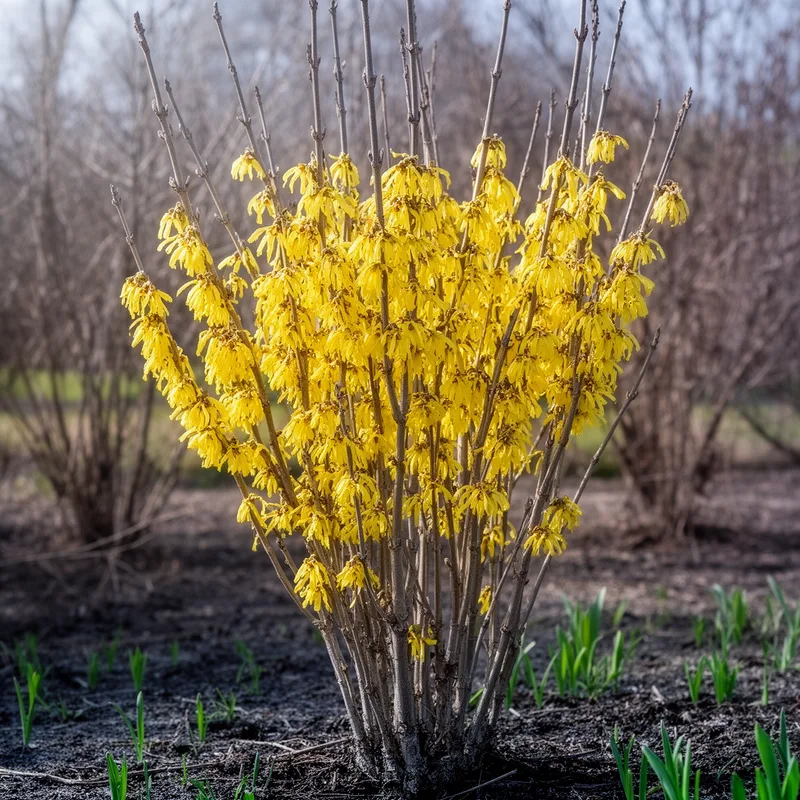
winter hazel
- noun
- /ˈwɪntər ˈheɪzəl/
- The winter hazel blooms beautifully in early spring.
Examples
-
In March, the winter hazel was already in bloom, brightening the garden with its vibrant racemes.
-
Gardeners often plant winter hazel for early-season color in their landscapes.
-
The winter hazel produces delicate yellow flowers long before its leaves unfurl.
-
I admire the winter hazel for its bright yellow flowers.
-
The winter hazel is admired for its delicate yellow flowers that bloom in early spring.
-
In the garden, the winter hazel bursts into color with clusters of yellow flowers before the leaves emerge.
-
Gardeners often choose winter hazel for its fragrant blooms that signal the start of spring.
Synonyms
A small shrub from Asia that loses its leaves and has yellow spring flowers

A shrub from Asia with drooping yellow flowers that bloom before the leaves
Surface Forms
Morphology
The term is a straightforward noun–noun compound: 'winter' qualifies the type of 'hazel', so a learner who knows both words will infer it refers to a hazel-like shrub associated with winter (i.e., flowering or noticeable in the winter/early-spring season). This kind of plant-naming compounding is common across languages and follows transparent compositional logic, so the overall meaning is readily deducible even if botanical specifics are unknown.
Etymology
Winter hazel gets its name from the way the shrub blooms in late winter: hanging bunches of yellow flowers open before the leaves appear. That's why gardeners plant it for 'early color' and why the name links winter for the early season and hazel because it is a small shrub.

