
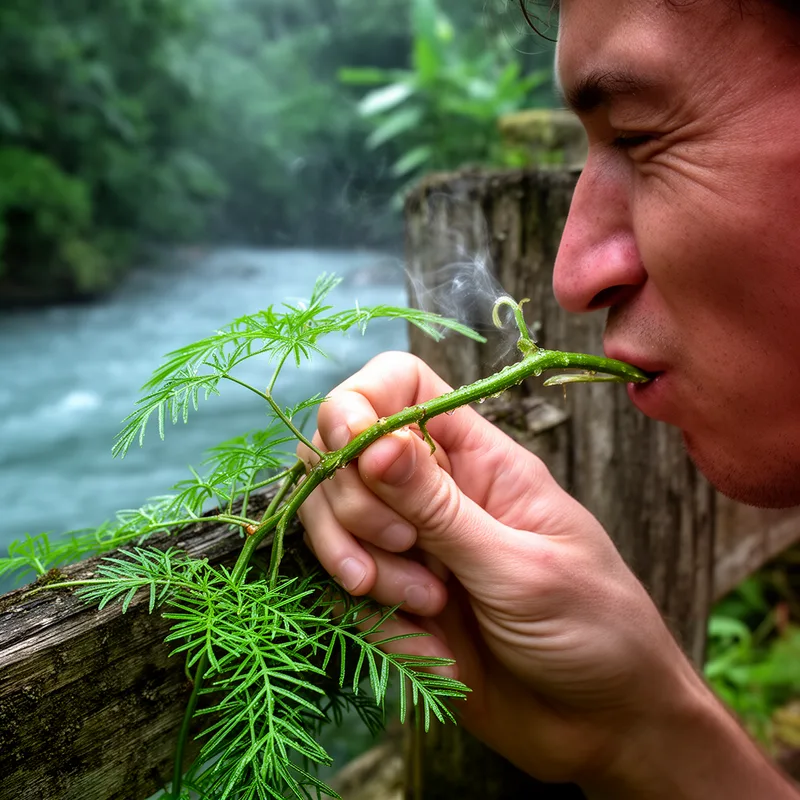
wild water lemon
- noun
- US
- When crushed, the stem of wild water lemon releases a pungent odor.
Examples
-
In the tropical garden, the wild water lemon displays its finely divided bracts, adding beauty to the landscape.
-
Botanists found wild water lemon thriving in the humid tropical forest.
-
The dense vines of wild water lemon covered the old fence near the river.
-
The wild water lemon has a unique fragrance.
-
Have you ever tried wild water lemons?
-
Botanists discovered the wild water lemon in the lush vegetation of the rainforest, where it flourishes.
-
The crushed stems of the wild water lemon emit a strong, sweet fragrance that attracts many insects.
Synonyms

A tropical passion flower from the Americas with thin leaf parts and stems that smell bad when crushed

A tropical climbing flower with fine leaf parts and a strong smell when crushed
A climbing tropical plant with thin divided leaf parts and stems that smell bad when crushed
Surface Forms
Morphology
The constituents 'wild' + 'water' + 'lemon' plausibly signal a wild, water-associated plant that is lemon-like, so a B1 learner who knows the words could infer it refers to some kind of lemon-like plant. However, the precise botanical identity (a Passiflora species with finely divided bracts and a characteristic odor) is lexicalized and not fully predictable from the parts, so the transparency is only partial.
Etymology
Wild water lemon may come from a simple picture: this wild vine often grows by water and its stems give a strong, lemon-like smell when crushed. So the name helps you remember a 'plant' growing by water that smells like lemon.

