
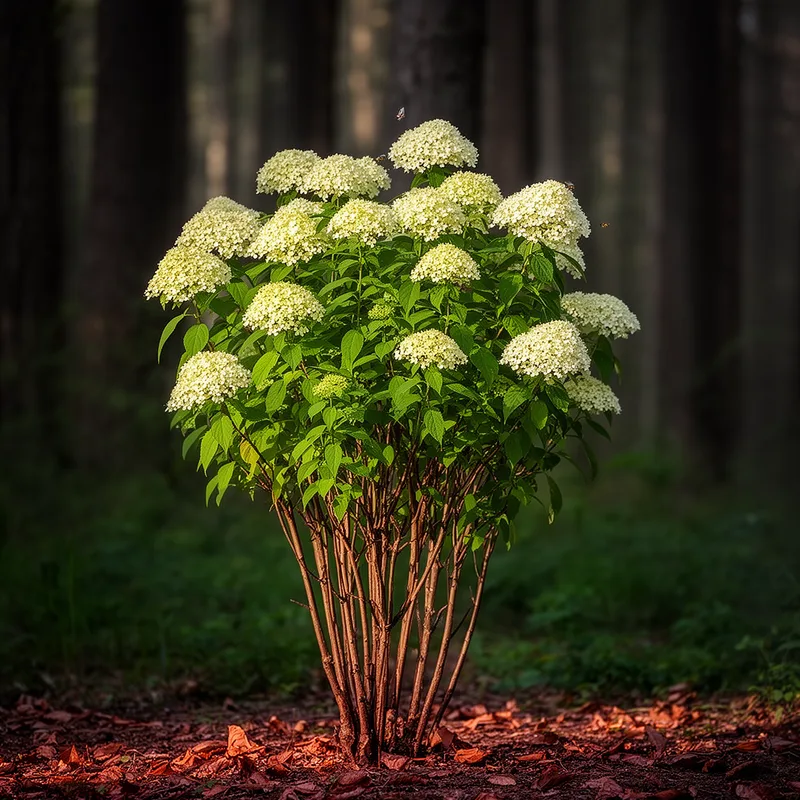
wild hydrangea
- noun
- /waɪld haɪˈdreɪndʒə/
- US
- The wild hydrangea thrives in the shaded woodlands of the Appalachian region.
Examples
-
In late spring, the wild hydrangea displays its beautiful creamy flowers along forest edges.
-
The wild hydrangea blooms beautifully in spring.
-
Gardeners often plant wild hydrangea to attract pollinators with its clusters of white blooms.
-
Many wild hydrangeas grow along the riverbank.
-
The wild hydrangea can be found blooming in many gardens across the eastern United States.
-
During the summer, the wild hydrangea produces beautiful clusters of creamy white flowers.
-
Many butterflies are attracted to the wild hydrangea because of its fragrant flowers.
Synonyms
A bush with large white flower clusters that blooms in early summer
Surface Forms
Morphology
The phrase is a straightforward modification of the noun by 'wild' — a hydrangea that grows naturally rather than being cultivated — so a B1 learner who knows both words can infer the basic meaning. Botanical specifics (deciduous, native range, flower color) add detail but are not required for understanding, and the 'wild + plant' pattern is cross-linguistically common.
Etymology
Wild hydrangea: The name wild hydrangea comes from hydrangea, a word from Greek meaning 'water' and 'vessel' because the plant's little seed pods look like small cups that could hold water. The word wild simply means the plant grows in nature, so the name tells you it is a hydrangea that grows in the wild and has clusters of creamy white flowers.

