

wild hyacinth
- noun
- /waɪld ˈhaɪəsɪnθ/
- The woods were carpeted with blooming wild hyacinth in early spring.
Examples
-
Conservationists are working to protect the habitat of the native wild hyacinth.
-
She photographed a cluster of wild hyacinth during her hike through the meadow.
-
I saw a beautiful wild hyacinth blooming in the forest.
-
The wild hyacinth is known for its vibrant colors.
-
The woods were carpeted with blooming wild hyacinth in early spring.
-
She photographed a cluster of wild hyacinth during her hike through the meadow.
-
I saw a beautiful wild hyacinth blooming in the forest.
Synonyms
 5
2.6
5
2.6

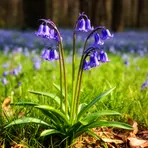
A plant with bell-shaped blue flowers that grows in woods or fields
 2
7.0
2
7.0
A spring bulb plant with many small fragrant blue, purple or white flowers
 1
1.3
1
1.3
A flower that grows naturally without being planted by people
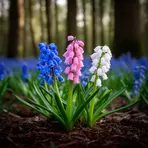
A small plant that grows in woods with blue, pink, or white flowers shaped like bells
Surface Forms
Morphology
The meaning 'a hyacinth growing naturally' is directly and compositionally derived from 'wild' (living naturally) + 'hyacinth' (a bulbous flowering plant). This simple adjective+noun pattern is cross-linguistically common and therefore a B1 learner who knows both constituents will readily understand the phrase.
Etymology
Wild hyacinth mixes hyacinth, the familiar garden flower with blue or purple blooms, and wild, meaning 'in nature'. So the name paints a simple picture: a plant that looks like a hyacinth but grows in meadows or woods, and that is why it means 'a blue or purple flowering plant found in the wild'.