
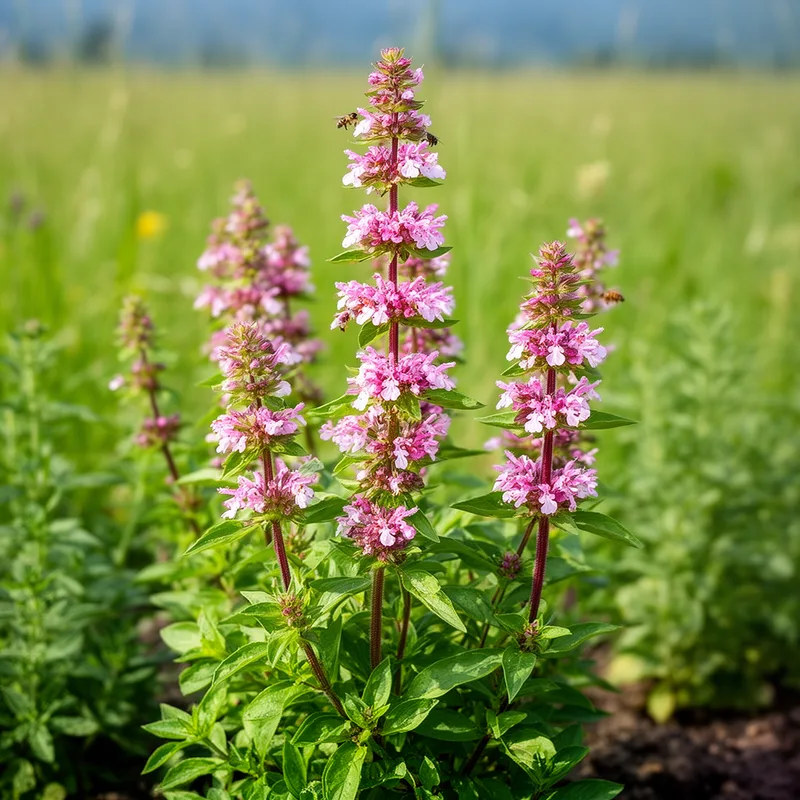
wild basil
- noun
- /waɪld ˈbeɪzəl/
- Wild basil grows naturally along forest edges and meadows across Europe and North America.
Examples
-
She used dried wild basil leaves to add flavor to the stew.
-
The garden was filled with the scent of wild basil in late summer.
-
I found some wild basil growing in my backyard.
-
Have you ever tasted wild basil in a salad?
-
Wild basil grows abundantly in the damp soil of rural gardens throughout Europe.
-
The aromatic flavor of wild basil makes it a popular choice for enhancing pasta dishes.
-
During our hike, we discovered patches of wild basil blooming near the stream.
Synonyms
A fragrant herb with small bunches of pink or white flowers

A fragrant plant that lives for several years with small pink or white flowers

A small aromatic herb with pink or white flowers used in cooking
Surface Forms
Morphology
The meaning of 'wild basil' is directly compositional: 'basil' names the herb and 'wild' specifies that it grows naturally or is uncultivated, so a learner who knows both words can infer the phrase. This noun + adjective compounding is a transparent, cross-linguistically common pattern, making the MWE accessible to a B1 learner.
Etymology
The noun wild basil comes from the simple image of basil growing on its own in nature. Wild shows it is not planted and basil is the fragrant herb, so the name means 'an aromatic herb that grows naturally'.

