
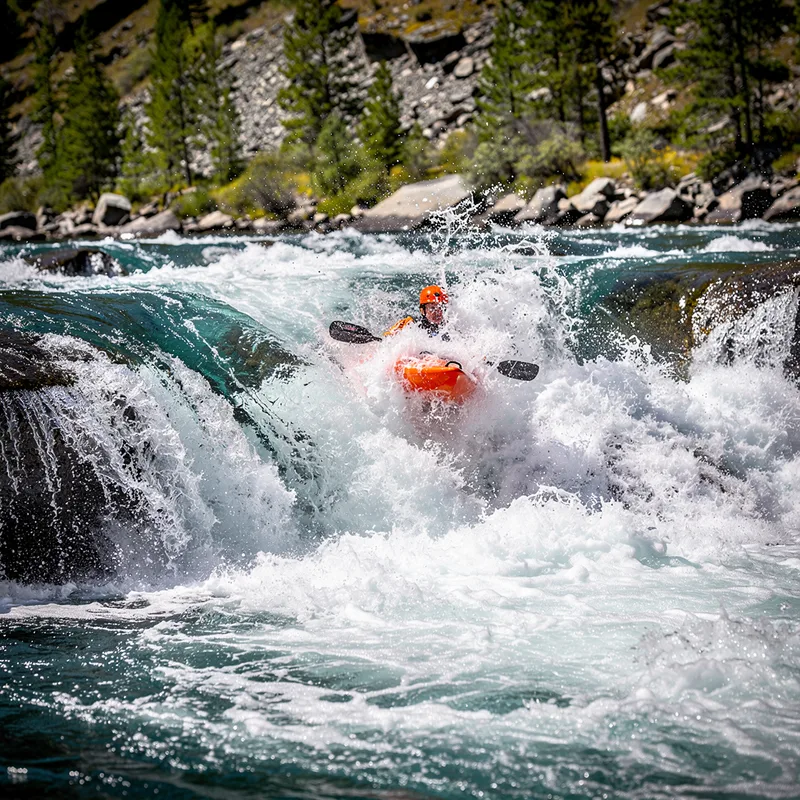
white water
 9
3.2
9
3.2

- noun
- /ˈwaɪt ˈwɔːtər/
- Even in the dark, they could see the white water immediately below them, pounding against the dune.
- white water kayakers
Loading YouTube…
Watch on YouTubeWe're lots of great white water there as well.
- We're lots of great white water there as well.
Examples
-
I'm going white water rafting with my dad.
-
But just beyond, the serious white water starts.
-
Just wait until you feel that white water under you.
-
Stay as close as possible to the white water without actually getting caught by it.
-
It was breaking so big that Waimea was just full of white water.
-
Keep that rudder amidships when you hit that white water downriver.
-
The canoes enter the white water, and they're so light, they're jet-propelled.
Fiction book (1992) -
To the north, the huge braided river poured in torrents, white water shooting high as it bashed from rock to rock.
Fiction book (1990) -
Torrents of white water tumbled in thin cataracts to a meadow sprinkled with rosemary and sweet William.
Fiction book (1999) -
The thrill of riding the white water rapids has brought a flood of tourists to the river.
Synonyms
 471
4.8
471
4.8
Fast, bubbly water in rivers with rapids or near waterfalls

 1
4.2
1
4.2
A fast, rough part of a river with white foamy waves
How Turbulent

Surface Forms
Morphology
The phrase is a straightforward adjective+noun composition: 'white' describes the appearance of 'water' (i.e., frothy, aerated rapids), so a B1 learner who knows both words can readily infer that it refers to turbulent, foamy river water. This is a descriptive, non-idiomatic compound following normal English composition patterns, making its meaning directly derivable from the constituents.
Etymology
White water comes from the way white foam and bubbles form when water rushes over rocks and falls, making the river look white and wild. So, people call the 'fast, rough' parts of a river white water because of that bright, frothy look.