
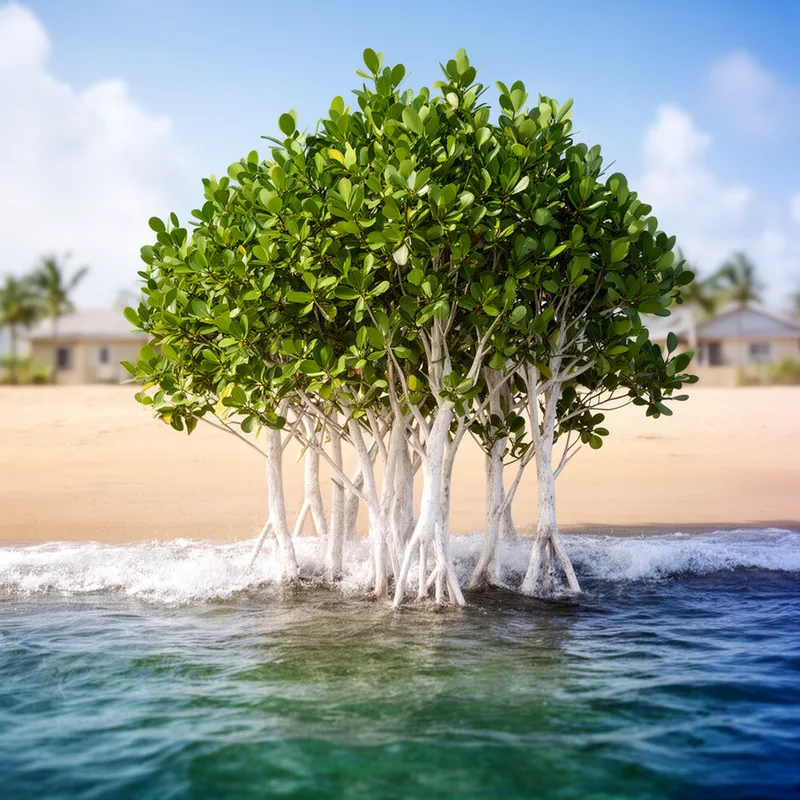
white mangrove
- noun
- /waɪt ˈmæŋɡroʊv/
- Specialized
- The white mangrove can be distinguished from other mangroves by its rounded leaves and habitat.
- black and white mangrove
Examples
-
The white mangrove thrives in coastal areas.
-
Tannin extracted from the white mangrove is used locally for various purposes.
-
Researchers studied the ecological role of the white mangrove in restoring coastal habitats.
-
Many white mangroves provide habitat for wildlife.
-
The white mangrove is often found in brackish coastal waters, providing essential habitat for various marine species.
-
In coastal regions, the white mangrove plays a vital role in stabilizing shorelines and preventing erosion.
-
She collected samples of the white mangrove's leaves to study their tannin content for potential uses in dyeing.
Synonyms

 13
7.0
13
7.0

A tropical tree with roots that stick out into the sea and protect the shore

A shrub or small tree that grows in slightly salty coastal water and whose bark people use to make dye

A tropical mangrove tree that grows on coasts
Surface Forms
Morphology
The phrase is a simple noun phrase combining the color adjective 'white' with the noun 'mangrove', so a learner who knows both words will readily infer it denotes a type/species of mangrove characterized by whiteness or pale features. This is a regular, compositional modifier+noun pattern common across languages and does not involve idiomatic or metaphorical meaning.
Etymology
White mangrove comes from the pale look of the tree—its trunk or the underside of its leaves can look almost white, so people used that colour with mangrove to tell it apart from 'red' and 'black' mangroves. That's why the name now refers to this coastal tree that grows where fresh and sea water mix and is sometimes used as a source of tannin.