
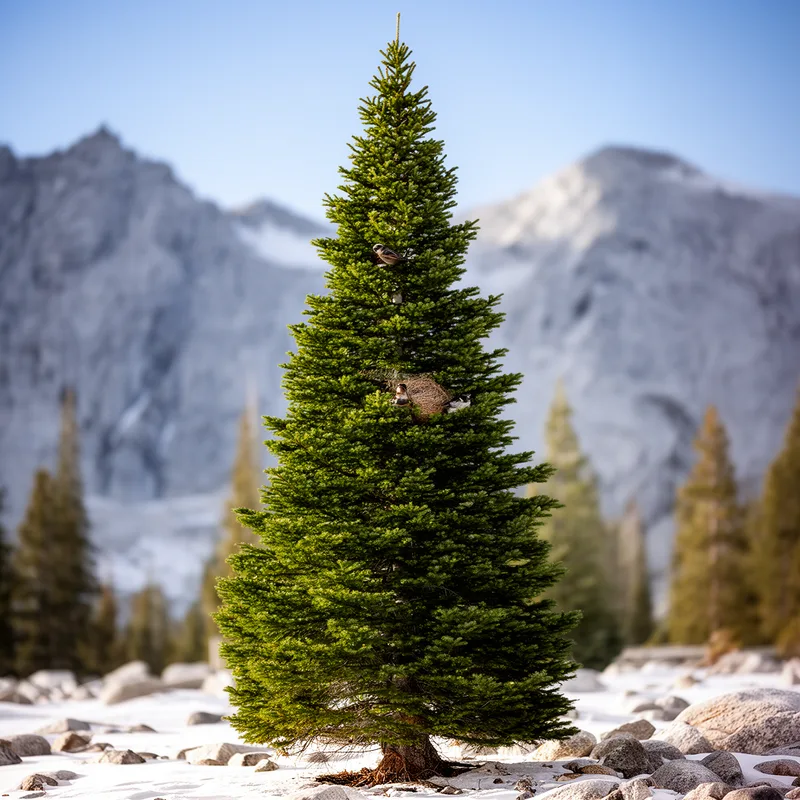
white fir


 1
6.7
1
6.7
- noun
- /waɪt fɜr/
- US
- Furthermore, to increase resilience to fire, smaller-diameter Douglas-fir and white fir will be preferentially removed, whereas ponderosa pine will be retained.
Examples
-
Future management activities will attempt to promote ponderosa pine and some Douglas-fir regeneration, maintain spatial complexity, and discourage white fir regeneration.
Academic text (2016) -
In this treatment, all white fir were removed, target canopy openness was around 30-40%, and large openings were prevalent.
Academic text (2016) -
As a starting point, density will be reduced substantially, but residual species composition will favor ponderosa pine and Douglas-fir over white fir.
Academic text (2016) -
The floors were of polished oak, and the walls were of vertical slats of white fir alternating with a darker wood.
Fiction book (1992) -
Douglas fir, white fir, sugar pine, ponderosa pine—and by their Latin names as well.
Academic text (2007) -
In the forest, the tall white fir stood out among the other trees with its soft needles and conical shape.
-
Hiking through the mountain trail, we encountered several white fir trees, their fragrance filling the air.
-
The carpenter chose white fir for the project because of its light weight and smooth texture.
Synonyms

A fir tree from western United States with soft wood and bluish green needles

A medium to tall fir tree that grows in the western United States and has soft wood

A medium to tall fir tree with a narrow upright crown and soft wood
Surface Forms
Morphology
The compound is a straightforward color + noun combination: 'white' (color) + 'fir' (a type of tree), so the meaning — a fir tree characterized as white or pale — is directly derivable from its parts. Color + noun compounds are a common and productive pattern in English (and many other languages), so a B1 learner who knows both constituents will readily understand it.
Etymology
White fir was named for how the tree looks, because the bark and the bottom of its needles often look pale or silvery, so people called it white and used fir to show its type of tree. So the name means 'a fir tree with a pale or silvery look'.