
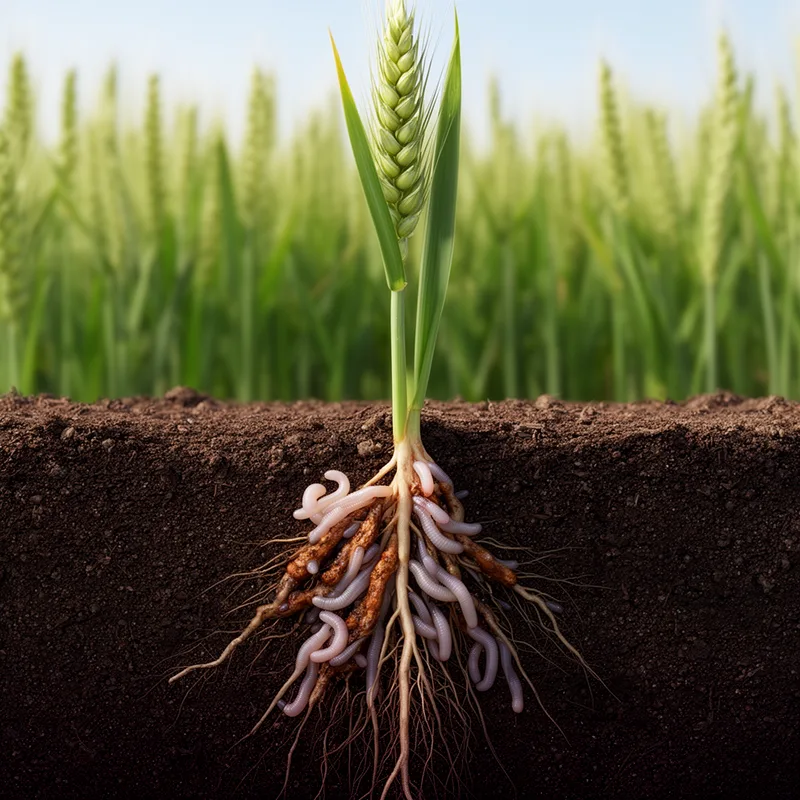
wheat eelworm
- noun
- /wiːt ˈiːlˌwɜrm/
- Specialized
- The presence of wheat eelworm in the soil can significantly reduce crop yields.
Examples
-
Farmers monitor their fields regularly for signs of wheat eelworm infestation.
-
Controlling wheat eelworm is important to prevent damage to wheat plants.
-
The wheat eelworm damages crops significantly.
-
Farmers are concerned about the wheat eelworm outbreak.
-
Farmers monitor their crops for wheat eelworm, as it can cause serious damage to wheat plants.
-
Effective management of wheat eelworm is essential to ensure healthy crop production.
-
The wheat eelworm infection led to a noticeable decline in the quality of the wheat harvest.
Synonyms

A small worm that lives in wheat plants and damages the crop
A small round worm that harms wheat plants

A small worm that lives on wheat plants and eats them, damaging crops

A small round worm that lives in soil and damages plant roots
Surface Forms
Morphology
The compound is a straightforward, literal combination of 'wheat' (the cereal crop) and 'eelworm' (a roundworm that damages crops), so its meaning—a roundworm that parasitizes wheat—is directly derivable from the parts. This type of noun-noun compounding is transparent and cross-linguistically common, so a B1 learner who knows both constituents would readily infer the MWE's meaning.
Etymology
Wheat eelworm comes from two simple images: wheat, the plant where the worm lives, and eelworm, a long thin worm that looks a bit like an eel. So, the name means 'a small, thin worm that lives on and harms wheat plants'.

