
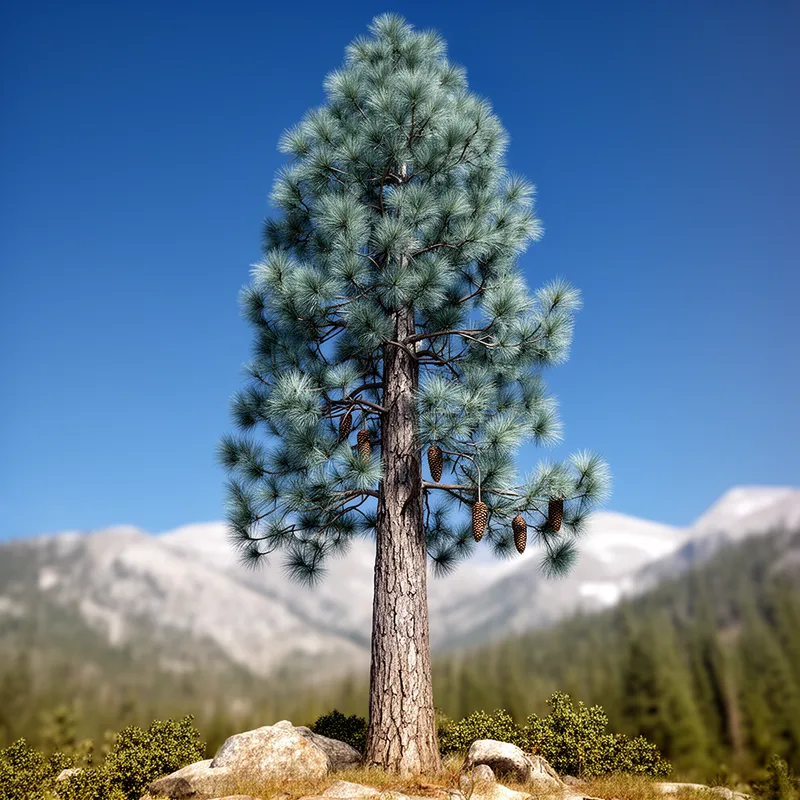
western white pine
- noun
- /ˈwɛstərn waɪt paɪn/
- US
- Many western white pines grow in the Pacific Northwest.
Examples
-
We saw several towering western white pines while hiking in the mountains of Idaho.
-
The western white pine is known for its tall stature.
-
The western white pine is known for its valuable timber and resistance to cold climates.
-
The needles of the western white pine have a distinctive bluish tint.
-
The western white pine grows tall, reaching heights of over 100 feet in the forests of the Pacific Northwest.
-
With its stout blue-green needles, the western white pine adds a unique character to the landscape.
-
The bark of the western white pine develops rectangular plates as it matures, giving it a distinctive appearance.
Synonyms

A tall pine tree from western North America with blue-green needles and scaly grey-brown bark
A tall pine from western North America with blue-green needles and bark that forms plates

A tall pine tree from western North America with blue-green needles and bark in flat grey-brown plates
Surface Forms
Morphology
The noun phrase is compositional: 'western' (from the west) + 'white' (color) + 'pine' (tree) clearly describes a pine tree from the western region with pale/white characteristics. This standard adjective + adjective + noun pattern is cross-linguistically common and therefore a B1 learner who knows the constituents can infer the meaning without prior exposure.
Etymology
Western white pine was named very simply: people used western to show where it grows, white to describe its pale wood and needles, and pine to name the kind of tree. So the name means 'a pale pine tree from the western part of North America'.

