
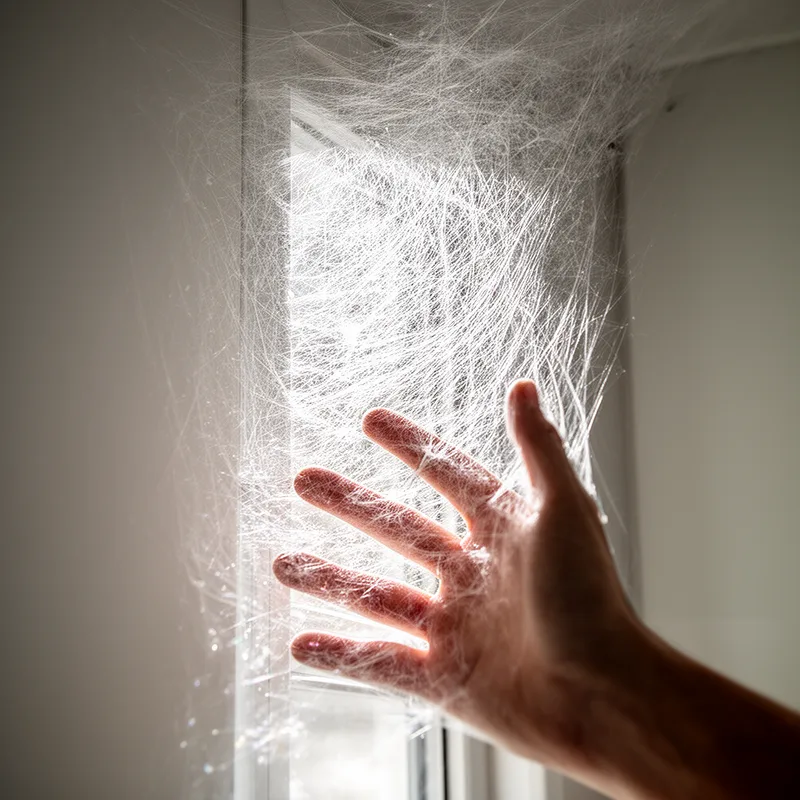
webby
- adjective
- /ˈwɛbi/
- And once they were all outlined, I kind of created some like spider webby effects and I just made it look a little bit more organic.
Loading YouTube…
Watch on YouTubeNow spider mites, you can tell by kind of their webby webs, their webby webs all over the plan.
- Now spider mites, you can tell by kind of their webby webs, their webby webs all over the plan.
Examples
-
Now spider mites, you can tell by kind of their webby webs, their webby webs all over the plan.
-
They're very small and very webby when they're young.
-
The fabric has a webby pattern that allows for airflow and keeps the blanket lightweight.
-
These fruits have a webby texture, making them difficult to peel without tearing.
-
The artist created a painting with webby shapes that gave it a unique three-dimensional effect.
Synonyms
 4
6.4
4
6.4

Thin and delicate like a spider's web or legs
 1
3.2
1
3.2
Made of thin cloth with small open patterns
Having thin threads that form a net like a spider's web

Having many small open spaces between thin crossing lines

Material with thin threads and many small holes

Having thin lines that form a shape like a spider's web

Very thin and delicate like a spider's web
Antonyms

How Web-like


Surface Forms
Morphology
Etymology
Webby comes from the simple word web, meaning a spider's web, plus the ending -y, which means 'full of' or 'like'. So webby describes something that looks or feels 'like' a web, with thin threads or open, net-like spaces.