
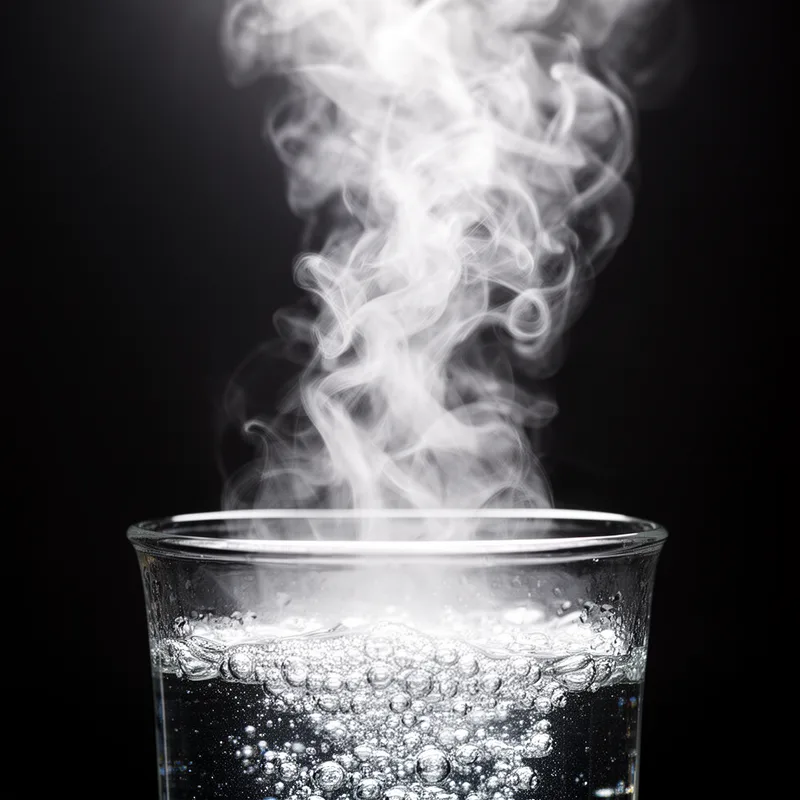
water vapor
 23
2.7
23
2.7

- noun
- /ˈwɔːtər ˈveɪpər/
- Specialized
- When the temperature goes up, the water vapor coming off the oceans into the sky is increasing significantly.
- atmospheric water vapor
- water vapor in the air
- water vapor in the atmosphere
Loading YouTube…
Watch on YouTubeThey think they're just vaping flavors and water vapor, which of course is not true.
- They think they're just vaping flavors and water vapor, which of course is not true.
- That means that the ice is a little more attractive to water vapor than the liquid is.
- Dew point is a direct measure of how much water vapor is in the air.
- OK, so that's that's diffusion of particles of water vapor.
- I say directly because even though the clouds coming out of nuclear power plants are only water vapour, power plants don't grow on trees.
- And then when you have sulfur mixed with the water vapor or the water in your lungs, this turns into sulfuric acid.
- We place it within our Gore Tex sleeve and then the Gore Tex gently regulates the release of the water vapour into the adjacent area.
- In this range, neither carbon dioxide nor water vapor absorbs much, so the radiation goes out into space almost undisturbed.
- Hydrogen mix is really interesting because hydrogen cars are really cool in concept because they only release water, right water vapor.
- If we detect water vapour and methane, it may mean someday that we've detected evidence of life on another world.
- If we detect water vapor and methane, it may mean someday that we've detected evidence of life on another world.
Examples
-
Dew point is a direct measure of how much water vapor is in the air.
-
Meteorologists use satellite images to track changes in water vapor that affect weather patterns.
-
But warm air can hold more water vapour than cold air.
-
Those are probably liquid as a result of adding water vapor to cold air.
-
The one at the top is showing you the trend in the water vapor in the atmosphere.
-
For example, warmer air can hold more water vapor than cooler air.
-
The most important of these gases are water vapor and CO2.
Academic text (1997) -
Water vapor is often funneled thousands of kilometers from the oceans over the land, and then much more of it falls at the same time.
-
As the water is heated, it forms water vapor, which condenses on the pane.
Academic text (1998) -
Cloud droplets form on aerosol particles in the atmosphere, which act as sites for water vapor condensation.
Academic text (1994)
Synonyms
 342
1.0
342
1.0
Water in the air as an invisible hot gas rising from boiling water
 96
3.2
96
3.2
Gas or very small drops of liquid in the air, like steam
Antonyms

How Humid

Surface Forms
Morphology
The meaning 'water in the form of a gas' is directly derivable from combining 'water' (H₂O) and 'vapor' (a gas or tiny droplets); the compound transparently names the gaseous form of water. This compositional noun-noun compound is common in scientific vocabulary and across languages, so a B1 learner who knows both constituents should understand it.
Etymology
Water vapor comes from the clear image of water turning into vapor: think of steam rising from a kettle and mixing into the air. That invisible steam is 'water in the form of a gas', so water vapor means water present as a gas in the air.