
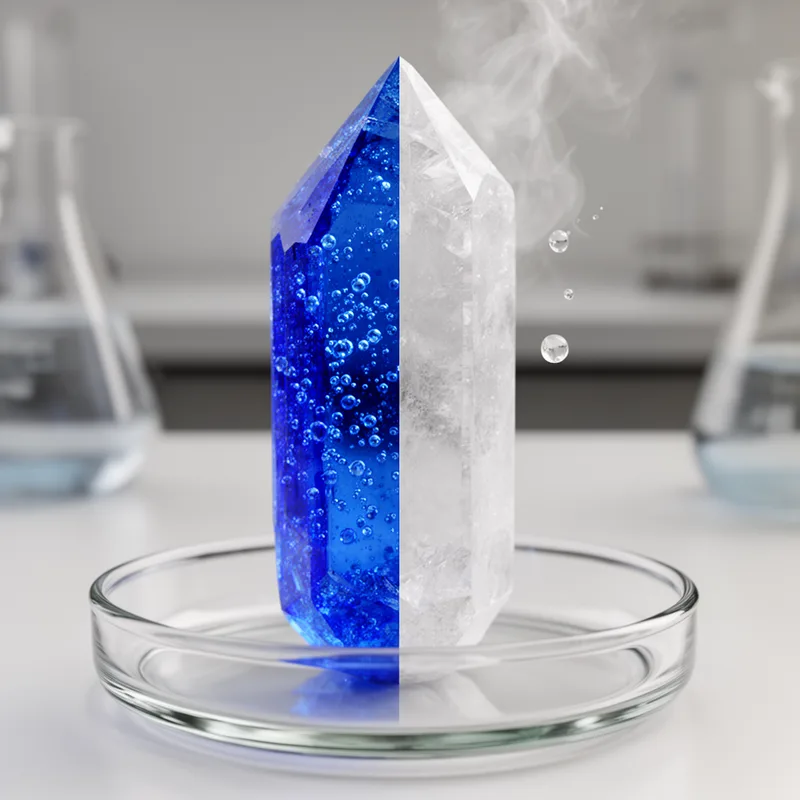
water of crystallization
- noun
- Specialized
- When heated, a hydrate loses its water of crystallization and turns into an anhydrous compound.
Examples
-
Copper sulfate crystals appear blue due to the water of crystallization contained within their structure.
-
The loss of water of crystallization can change the color and properties of the salt.
-
The water of crystallization is essential for the structure of many hydrates.
-
Some compounds lose their water of crystallization when heated.
-
When a hydrate loses its water of crystallization, it may alter its appearance and physical properties.
-
The blue color of copper sulfate crystals comes from the water of crystallization in their structure.
-
In chemical reactions, the role of water of crystallization is crucial for maintaining the integrity of hydrates.
Synonyms
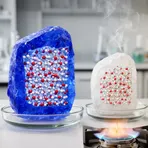
Water held inside a crystal as part of its structure
Surface Forms
Morphology
water + of + crystallization
The phrase directly combines 'water' and 'crystallization', so a learner can infer it refers to water associated with crystals or the crystallization process. However, the precise technical sense—water molecules chemically incorporated into a crystal lattice (as in hydrates)—is specialized and not fully predictable from the constituents for an average B1 learner without chemistry background.
Etymology
The noun water of crystallization paints a simple picture: tiny water molecules are trapped in the regular spaces of a formed crystal, which is what crystallization refers to, like water hiding in small rooms of a building. Because that water is part of the crystal, losing it can change the salt's color and make it 'dry', so the phrase means the water held inside the crystal structure.

