
water-rate
 1
4.6
1
4.6

- noun
- But town authorities had also set the water rates to generate a small profit, a fact that spawned a vigorous debate among residents.
- water rates for all customers
- increasing water rates
Examples
-
The existing laws and regulations allow water providers to recover their costs through water rates.
Academic text (1992) -
The Board of Directors has reduced the winter water rate with the intent of improving the feasibility of planting winter crops in order to help remedy this increasing problem within the district.
Academic text (1995) -
Do you want higher than necessary water rates?
Blog text (24) -
Before 2010, water rates were already increasing fast.
Blog text (3) -
This is especially true for areas that have average or higher water rates.
Academic text (2003) -
Understanding farm needs led the district to provide lower water rates in the winter, so farmers could grow small grains.
Academic text (1995) -
Although this is true, the revenue shortfall can be predicted, and water rates can be increased accordingly.
Academic text (1992) -
Some measures were taken to reduce water consumption, including the imposition of new water rates in 1994 in order to avoid wastage and excess consumption.
Academic text (2015) -
In addition to the fees levied directly by provinces, there is a remarkable diversity of water rates and water rate structures charged by regional and municipal water authorities, such as for water use by residents and businesses.
Academic text (2008) -
In Berkeley, the new water rate will affect all homeowners starting next month.
Synonyms
 ∞
2.1
∞
2.1
The price charged for something often per hour or unit
Surface Forms
Morphology
Etymology
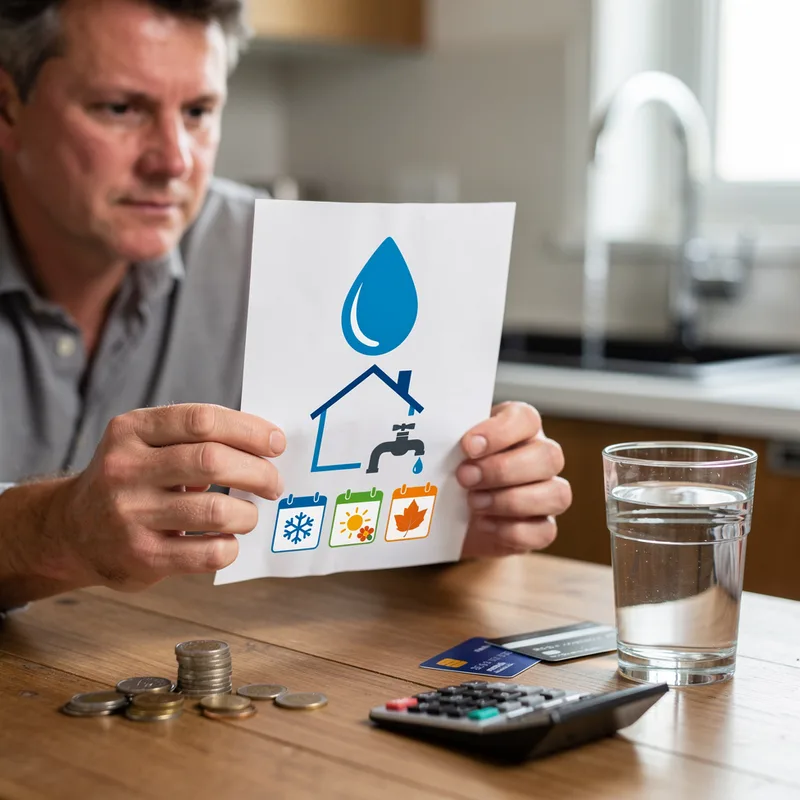
Water-rate is a simple compound: the first part water is the everyday word for the liquid we use at home, and the second part rate appears in phrases like interest rate or exchange rate to mean an 'amount' or 'price' for something. So a water-rate is the regular charge you pay for your water, often billed every three months.