
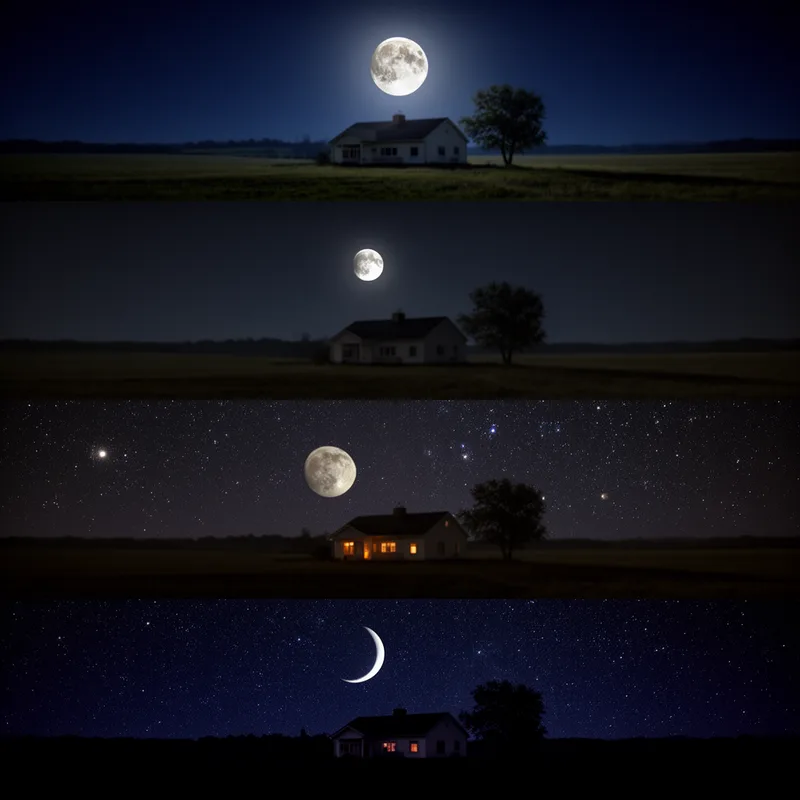
waning
6.2
The moon's lit part becomes smaller each night
- adjective
- /ˈweɪnɪŋ/
:
menguante
- Farmers often used the waning phase of the moon to determine the best time for planting certain crops.
Examples
-
As the month progresses, the waning phase becomes more noticeable.
-
The harvest festival was held under a waning moon.
-
As the waning moon rose, the night became darker and quieter.
-
The waning moon shone faintly in the night sky.
-
As the waning moon illuminated the garden, shadows grew longer and softer.
-
The waning moon is a perfect time for stargazing, as it provides less light pollution.
-
During the waning phase, the moon appears smaller and less bright in the sky.
Synonyms


Antonyms

Surface Forms
waning positive
Morphology
Etymology
Waning comes from the old English verb wane, which means 'to decrease'. It was first used for the Moon when its bright part 'grows less', so a waning moon shows less light each night.