
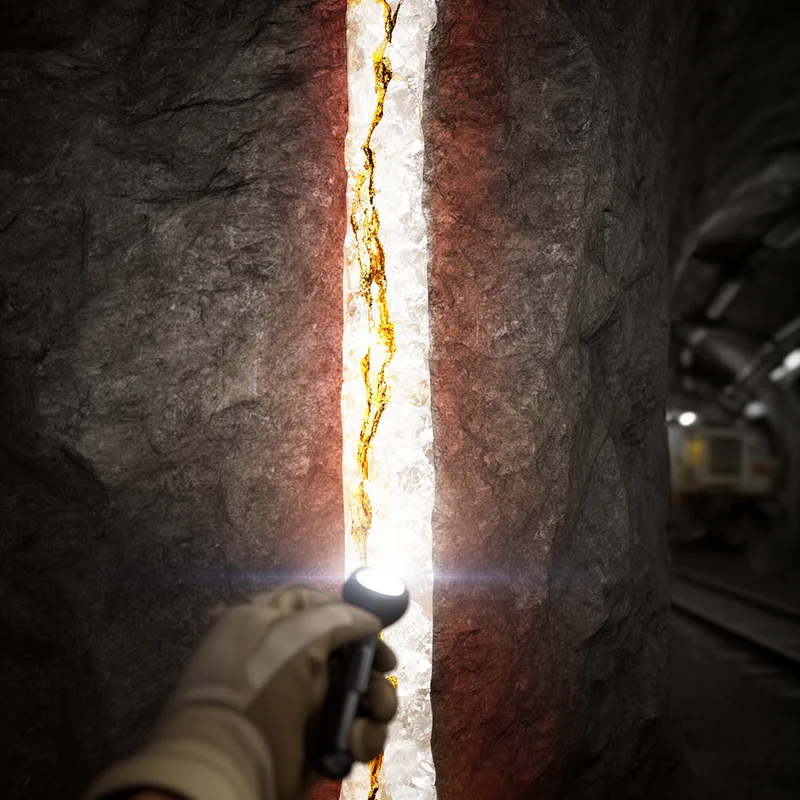
wall rock
- noun
- In mining operations, understanding the properties of the wall rock is crucial for safety and planning.
Examples
-
The wall rock can reveal important geological information.
-
Geologists examined the wall rock to determine the history of mineralization in the area.
-
The wall rock showed clear signs of alteration from the heat of the vein intrusion.
-
Many geologists study wall rocks to understand mineral deposits.
-
The geologist carefully examined the wall rock to determine its relationship with the nearby vein of minerals.
-
In the tunnel, the wall rock revealed important clues about the fault line's formation.
-
As we dug deeper into the mine, the texture of the wall rock changed, indicating a shift in the geological structure.
Surface Forms
Morphology
The phrase is transparently built from 'wall' + 'rock', so a learner will likely infer it refers to rock associated with or beside a wall/side. However, the specific technical sense — rock immediately adjacent to a vein, fault or geological structure — is domain-specific and not fully predictable for a B1 learner, so it is only partially transparent.
Etymology
Wall rock comes from miners and geologists who called the stone that forms the side of a mineral vein the wall and the solid stone around it the rock. Imagine a narrow crack filled with minerals. The hard stone right beside that crack is the 'wall rock', so the term means the rock immediately next to a vein or fault.

