
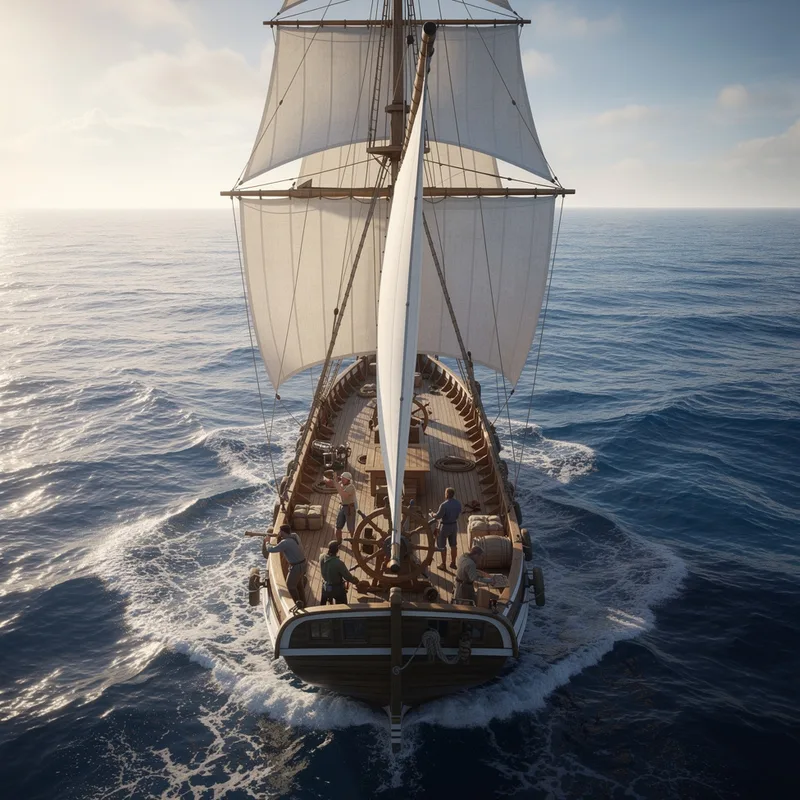
to voyage
 3
4.0
3
4.0

- verb
- /ˈvɔɪɪdʒ/
- During the adventure, the pair voyaged to Australia's Great Barrier Reef, the deep waters off Fiji, volcanic Tahiti and Moorea, and Rangiroa Atoll.
Loading YouTube…
Watch on YouTubeSo we have, we have this voyaging canoe we built on Rujai.
- So we have, we have this voyaging canoe we built on Rujai.
Examples
-
Radnor, the second son, was a trader, and he voyaged far and wide with his goods.
Fiction book (1994) -
The Vikings were intrepid sailors, voyaging out across the seas, establishing colonies in Iceland and Greenland.
-
The World is the only residential community at sea, allowing guests to voyage the seven seas in style and comfort.
Blog text (4) -
By voyaging only at night or in the fog, we expect to avoid the enemy.
-
Soon he is voyaging into the countryside.
Academic text (2012) -
And he says he may bring me a zebra when next he voyages to Africa.
Fiction book (1998) -
Voyaging in the Pacific has been part of my life since earliest childhood.
Academic text (2003) -
Pre-1915 Polynesians, voyaging northward from Tahiti, established a society in the Hawaiian Islands about 1,000 years ago.
Academic text (2009) -
During the summer, many families voyage along the coast, exploring hidden coves and islands.
-
The crew prepared the ship as they were about to voyage across the Atlantic Ocean to a new world.
Synonyms
 ∞
1.0
∞
1.0
To go from one place to another, often for work or pleasure
 275
1.0
275
1.0
To travel on water in a boat, often using large fabric to catch wind
 263
1.0
263
1.0
To go to another place for work or pleasure
 40
2.6
40
2.6
To travel from one place to another over a long distance
 10
1.0
10
1.0
To travel on water in a small vehicle like a rowboat or motorboat
Antonyms


Compounds


How Long
6
8.3
 3
4.0
420
2.8
275
1.0
29
2.0
62
1.0
3
4.0
420
2.8
275
1.0
29
2.0
62
1.0
Surface Forms
Etymology
To voyage comes from the same Latin via 'way' and once meant to travel along a road or path. So to voyage is to travel a long distance, usually by ship or boat.