
voltinism
- noun
- /ˈvɒltɪnɪzəm/
- Specialized
- Many insects change voltinism (the number of generations per year) across latitudinal gradients (Chown and Gaston 1999; Gaston 2003), which may shape their ability to deal with winter conditions.
- changes in voltinism
- differences in voltinism
- voltinism-associated changes
Examples
-
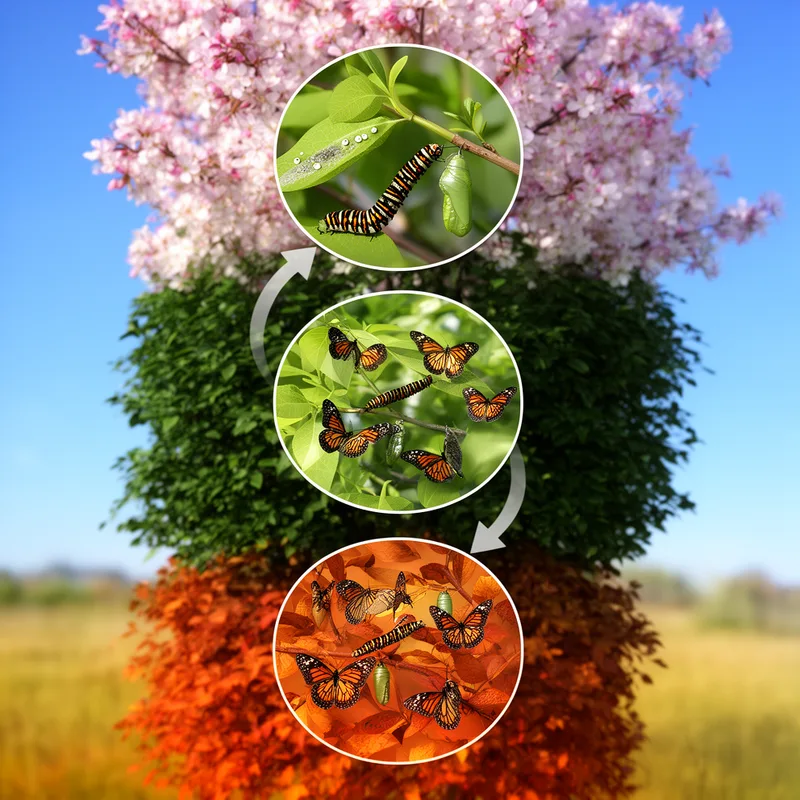
In temperate climates, the voltinism of certain insect species allows them to produce several generations each year.
-
Our data support the novel hypothesis that the widespread occurrence of latitude-associated voltinism shifts in insects may be an important selective factor contributing to latitudinal shifts in winter survival.
Academic text (2018) -
As our focus was on latitudinal patterns in growth rate (and their link to voltinism), we report the growth data in "Results" and the associated temporal patterns in head widths.
Academic text (2018) -
The rather subtle changes in growth rate when switching the photoperiod, as detected in the study by Sniegula et al. (2012), seem, however, unlikely to translate into changes in voltinism.
Academic text (2018) -
Given that faster growth rates are traded off against functions such as energy storage and investment in immune function (Dmitriew 2011), we hypothesize that the voltinism gradient may contribute to shaping a gradient in the ability to deal with winter conditions.
Academic text (2018) -
We tested for latitude-associated changes in winter survival under a simulated high-latitude winter in a freshwater insect that shows changes in voltinism across a north-south gradient in Europe.
Academic text (2018) -
Changes in voltinism can significantly affect how insects survive harsh winter conditions.
-
Understanding voltinism helps researchers predict how insect populations may adapt to environmental changes.
Surface Forms
Morphology
voltinism = voltine (semi-transparent) = voltine + ism
Formed by the standard noun-forming suffix '-ism' from the adjective 'voltine'; the morphological relation is regular but 'voltine' is a technical/rare term not known to most learners.
Etymology
Voltinism comes from the root volt- meaning 'turn', as in revolve, so you can picture an insect life cycle making a series of 'turns' through the year. That's why voltinism tells how many generations an insect produces in one year.

