
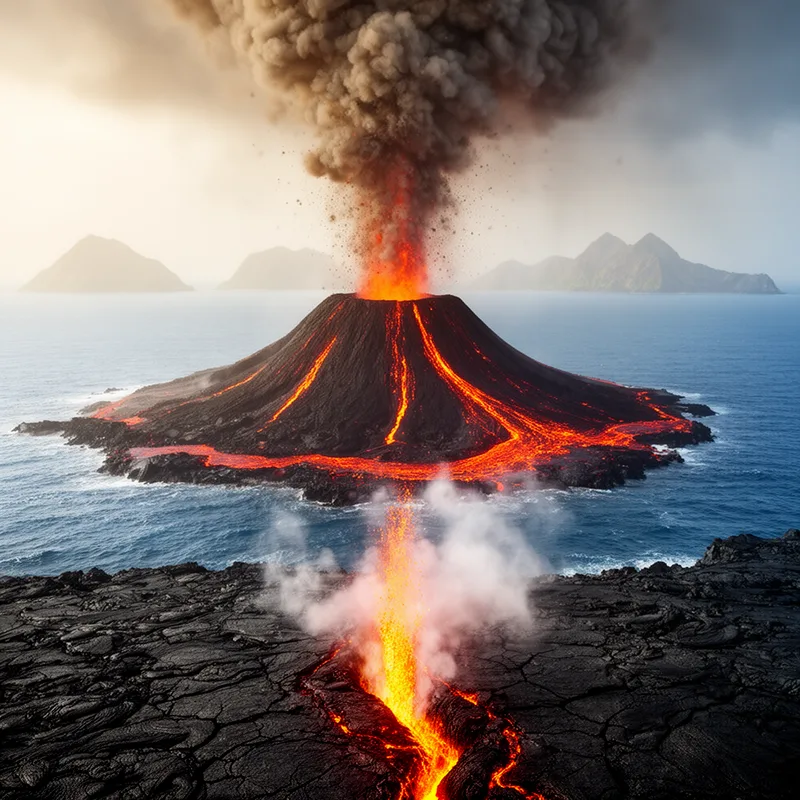
volcanism
 4
6.8
4
6.8

- noun
- /vɑlˈkeɪnɪzəm/
- Specialized
- In this image from the Galileo spacecraft, the dark areas represent the areas of active and recent volcanism.
- recent volcanism
Examples
-
Eventually, the volcanism that created these plains became more localized or died out completely.
Academic text (1995) -
If there are long-term significant variations, then could there be volcanism changes also?
Blog text (5) -
And could that have any implications for the volcanism on our own planet?
-
Impacts can cause volcanism in two ways.
Academic text (1991) -
Both are areas of active or recent volcanism with unique magma chemistry.
Academic text (1994) -
But the seas of my planet are relatively shallow, with constant volcanism beneath.
Fiction book (2000) -
Most of the remote areas that did respond are known for geothermal activity or recent volcanism.
Academic text (1993) -
The pH of cold ocean waters may have been altered by transient volcanism at sea.
Blog text (30) -
In this model, volcanism and tectonism have affected localized areas on a continual basis.
Academic text (1995) -
The intense volcanism on Mars shaped the planet's landscape millions of years ago.
Synonyms
 8
3.7
8
3.7
Eruptions and other events that happen at volcanoes
How Active
- Specialized
4
6.8

- Specialized
Surface Forms
Morphology
Etymology
Volcanism comes from volcano, which was named after the Roman god Vulcan, 'the god of fire'. So volcanism is the Earth's 'fire' at work, the eruptions of melted rock, gases, and ash that shape the land.