

vivid wordscape
- noun
- Literature
- The poet's use of imagery creates a vivid wordscape that draws readers into the scene.
Examples
-
Through his memoir, he crafts a vivid wordscape of his childhood experiences.
-
Her novel opens with a vivid wordscape of the bustling city streets.
-
The author painted a vivid wordscape of the bustling city.
-
Can you create a vivid wordscape for your story?
-
Her novel opens with a vivid wordscape of the bustling city streets.
-
The poet's use of imagery creates a vivid wordscape that draws readers into the scene.
-
Through his memoir, he crafts a vivid wordscape of his childhood experiences.
Synonyms

 43
4.6
43
4.6

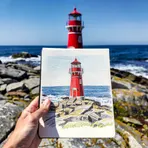
Language that makes you picture scenes, sights, or sounds
 25
4.4
25
4.4
A description using words that shows what something is like
 2
4.2
2
4.2
A clear description that makes you imagine a scene
 1
3.6
1
3.6
A lively story with bright, unusual details that make it interesting
 1
4.0
1
4.0
Words that make a clear strong picture in your mind

A description in words that makes you imagine something clearly
Antonyms

How Vivid

Surface Forms
Morphology
vivid + wordscape
The adjective 'vivid' is fully transparent, and the noun 'wordscape' is a creative compound built from 'word' plus a '-scape' element (as in 'landscape'/'soundscape'), so its core sense — a scene or panorama made with words — is inferable. However, 'wordscape' is a nonce/less-common formation and relies on morphological awareness of the suffix, so a B1 learner who knows the parts can often guess the meaning but not with complete confidence.
Etymology
Vivid wordscape comes from putting together word and landscape to imagine a picture made of language. One popular image is a writer 'painting' a bright scene with words, so a vivid wordscape means a 'lively, colorful description' that helps readers 'see and feel' the place.