
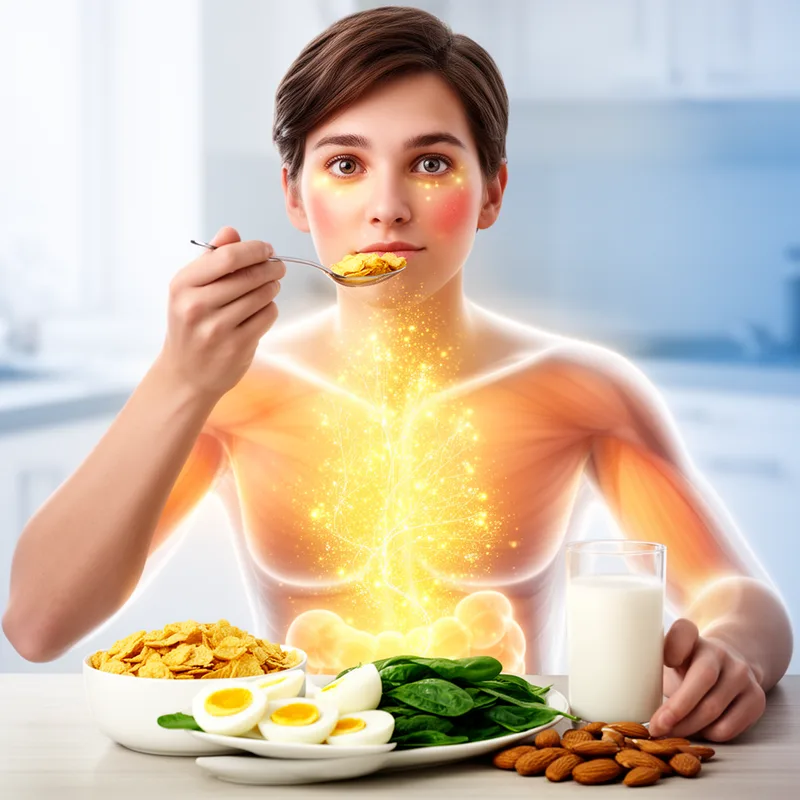
vitamin B2
- noun
- /ˈvaɪtəmɪn biː tuː/
- Specialized
- Riboflavin (or vitamin B2) is a key member of this group of vitamins, and yellow is the natural color of riboflavin.
Examples
-
Vitamin B2, also known as riboflavin, is essential for maintaining healthy skin and preventing weight loss.
-
Only vitamin B2 metabolism increased.
Academic text (2018) -
This is consistent with recent studies showing that the activity of vitamin B2 metabolism does not decrease until after the age of 50.
Academic text (2018) -
Eating foods rich in vitamin B2, such as eggs and green leafy vegetables, can help improve your overall health.
-
A deficiency in vitamin B2 may lead to skin lesions and other health issues, highlighting its importance in the diet.
Synonyms

 4
5.3
4
5.3

A vitamin the body uses to make energy and keep skin healthy

A B vitamin that helps keep skin healthy and prevent weight loss

An old name for the vitamin riboflavin that prevents skin problems and weight loss

A B vitamin that helps the body grow and stops skin problems and weight loss
A vitamin that helps the body grow, makes red blood cells, and keeps skin healthy
Surface Forms
Morphology
vitamin + B2
The phrase is directly compositional: 'vitamin' indicates a nutrient and 'B2' is a subtype label, so a learner who knows both constituents will understand this refers to a specific B-complex vitamin. The exact biochemical details (riboflavin, health effects) require background knowledge, but the basic meaning 'a type of vitamin (B group) called B2' is transparent and follows common cross-linguistic labeling conventions.
Etymology
Vitamin B2 got its name when early scientists gave vitamins letters and numbers and this one was number 2; it is also called riboflavin, made from ribo- (a small 'sugar') and flavin (meaning 'yellow') because the substance is yellow. So, the name vitamin B2 is used for this important nutrient that helps keep skin and eyes healthy.