
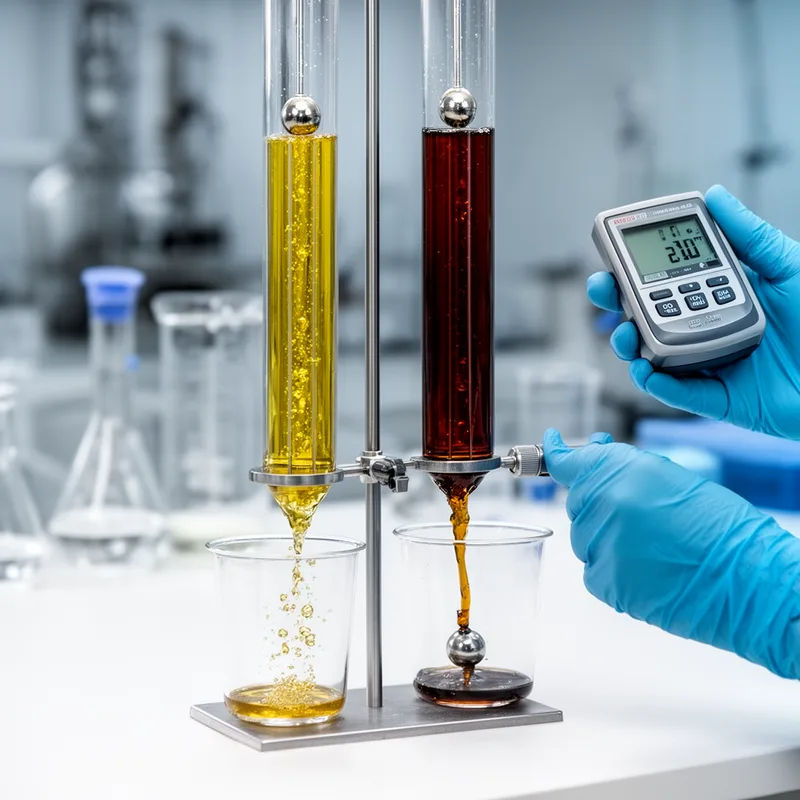
viscosimetry
9.9
Measuring how thick or runny a liquid is, for example oil and syrup
- noun
- /vɪˈkɒsɪˌmɛtri/
- Specialized
:
viscosimetría
- The researchers performed viscosimetry to determine the fluid's resistance to flow.
Examples
-
L. Moberg was responsible for the conduct of the study, including compilation of data and statistical analysis, and writing the report. H. Johansson did the viscosimetry analyses and the iFVIIa study.
Academic text (2002) -
The team's findings were based on extensive viscosimetry, which revealed crucial data about the lubricant's performance.
-
In order to analyze the sample's properties, the scientist used viscosimetry as a key measurement technique.
Synonyms

9.1
Measuring how thick or runny a liquid is
focuses on measurement typically using a dedicated instrument rather than general tests
Surface Forms
viscosimetry singular
viscosimetries plural
Morphology
Etymology
The word viscosimetry comes from viscos- meaning 'sticky', the same root as viscous and viscosity, and from -metry meaning 'measure', as in meter. So viscosimetry is the measurement of how thick or sticky a liquid is.

