
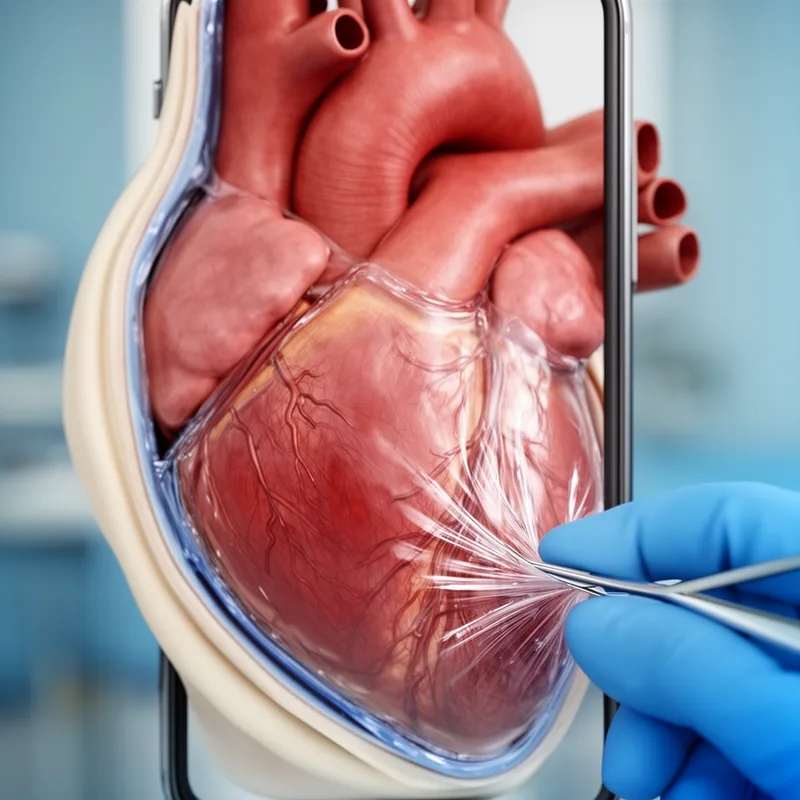
visceral pericardium
- noun
- /ˈvɪsərəl ˈpɛrɪˌkɑrdɪəm/
- Specialized
- The visceral pericardium directly adheres to the surface of the heart.
Examples
-
Inflammation of the visceral pericardium can cause pericarditis and chest pain.
-
Surgeons need to carefully examine the visceral pericardium during heart surgery.
-
During the dissection, the visceral pericardium was carefully separated from the underlying tissue.
-
The visceral pericardium protects the heart from friction.
-
Inflammation of the visceral pericardium can lead to chest pain and other complications.
-
The visceral pericardium directly adheres to the surface of the heart, providing a protective layer.
-
During the dissection, the visceral pericardium was carefully separated from the heart to study its structure.
Synonyms


 1
9.8
1
9.8
Thin inner layer of the sac around the heart that covers its surface
Surface Forms
Morphology
The phrase is a straightforward anatomical compound: 'pericardium' names the heart’s protective membrane and 'visceral' denotes the layer next to the organ. Given those constituent meanings, a learner can transparently infer that this refers to the inner layer of the pericardium that closely envelops the heart. The compositional pattern is common in medical terms and therefore predictable from the parts.
Etymology
Visceral pericardium means the 'inner layer' of the pericardium that lies directly on the heart. Think of the pericardium as a thin bag and visceral as the part that 'hugs' the heart, so the term names the layer that covers the heart closely.