

viper's bugloss
- noun
- /ˈvaɪpərz ˈbʌɡləs/
- The meadow was dotted with the bright blue flowers of viper's bugloss.
Examples
-
Despite its weeds status, viper's bugloss adds vibrant color to roadsides in summer.
-
Gardeners often plant viper's bugloss to attract bees and butterflies.
-
The viper's bugloss blooms beautifully in the summer.
-
Have you seen the viper's bugloss growing near the trail?
-
In spring, the garden was beautiful with viper's bugloss blooming next to the pathway.
-
Bees are often seen visiting the bright blue flowers of the viper's bugloss in open fields.
-
The viper's bugloss is known for its striking appearance and ability to thrive in rocky soil.
Synonyms
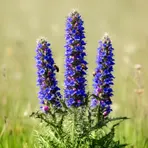
A rough, prickly European plant with tall spikes of blue flowers

A rough prickly plant that has spikes of bright blue flowers
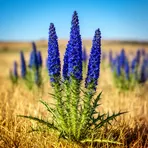
A prickly plant with tall spikes of blue flowers that grows in fields
Surface Forms
Morphology
viper's + bugloss
The compound is compositionally formed from 'viper's' (relating to a viper) + 'bugloss' (a plant), so a learner who knows both constituents would understand it denotes a kind of plant associated with a viper. However, the specific species-level properties (rough, prickly, bright blue flowers) and why it is called after a viper are not predictable from the parts alone, and 'bugloss' is a low-frequency lexical item, making the relation only partially transparent.
Etymology
The name viper's bugloss may come from old stories: people called it viper's because its bright flowers have reddish marks that looked like a snake's tongue or eye, and bugloss originally meant 'ox-tongue' because the leaves feel rough like an animal's tongue. So the name points to the plant's rough leaves and bright marks, which is why it names this blue, prickly wildflower today.

